I compared our mid-April to mid-May NV Energy bills for 2019, 2020 and 2021 to get an idea of how our new hot water heater affected our energy use. The good news is that we used 59% less natural gas! We used an average of 34 therms in 2019 and 2020, and only 14 in 2021! So, it made a huge difference in our natural gas use.
Our use of electricity was up about 130 kWh from this time last year. The new hot water heater likely made up about 80 kWh of the increase. The other 50 kWh was likely due to a colder May this year and increased travel in our LEAF. It was about 9 degrees colder in May, 2021 than in May, 2020, so we used more of our booster electric heaters this year. Our parents are needing more help these days, so we are traveling more in the LEAF to assist them.
We are loving this new hot water heater! We’ve pretty much left it on the Heat Pump Only setting, which is the most efficient. This gives us the same hot water we are used to having with our old system. It works fine for the two of us, as long as we don’t take back-to-back showers, which we don’t usually do. If we have a higher use day, or have guests, we can set it to Hybrid or Electric mode. If we set it in Electric mode, it will automatically revert to Heat Pump Only in 12 hours.
An extra added bonus as we get into the warmer months is it keeps the garage cooler, because it takes the warm air from the garage to heat the water, expelling cold air out of the tank. It does make a bit of noise when it is in operation, so I can see that you may not want it inside your house. It works great in the garage. So far we haven’t noticed any condensation coming out of the unit in our dry climate.
Our next adventure will be adding a heat pump heater and A/C unit, so stay tuned!
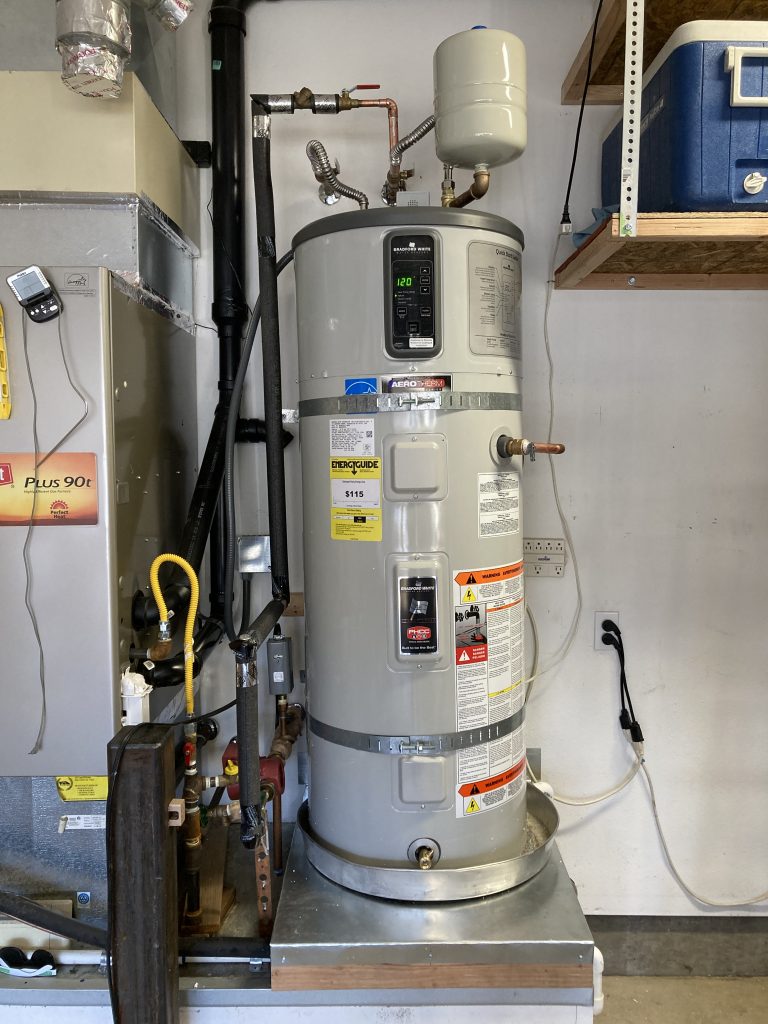
Isn’t she a beauty? What? You don’t think water heaters are sexy? Oh, but she is hot and super-efficient! I bet you’re wondering what is a “hybrid heat pump water heater”?
NOTE: This post has been updated as of May, 2025. Changes are in red.
A hybrid water heater, or heat pump water heater, uses heat from outside air drawn into the appliance’s evaporator coil. The evaporator coil contains refrigerant, allowing it to absorb heat from the air. Finally, a heat exchanger heats water within the tank to the desired temperature before it passes from the heater tank into your home’s showers, faucets, and large appliances.
This electric water heater uses heat from outside air drawn into the
appliance’s evaporator coil. The evaporator coil contains refrigerant, allowing
it to absorb heat from the air. Finally, a heat exchanger heats water within
the tank to the desired temperature before it passes from the heater tank into
your home’s showers, faucets, and large appliances. It’s helpful to think about
this process as being like that of your refrigerator, but in reverse. Instead
of expelling hot air to cool the contents of a refrigerator or freezer, a heat
pump water heater pulls hot air in to heat the water. Because it moves heat, it
is over 50% more efficient than a standard electric water heater.
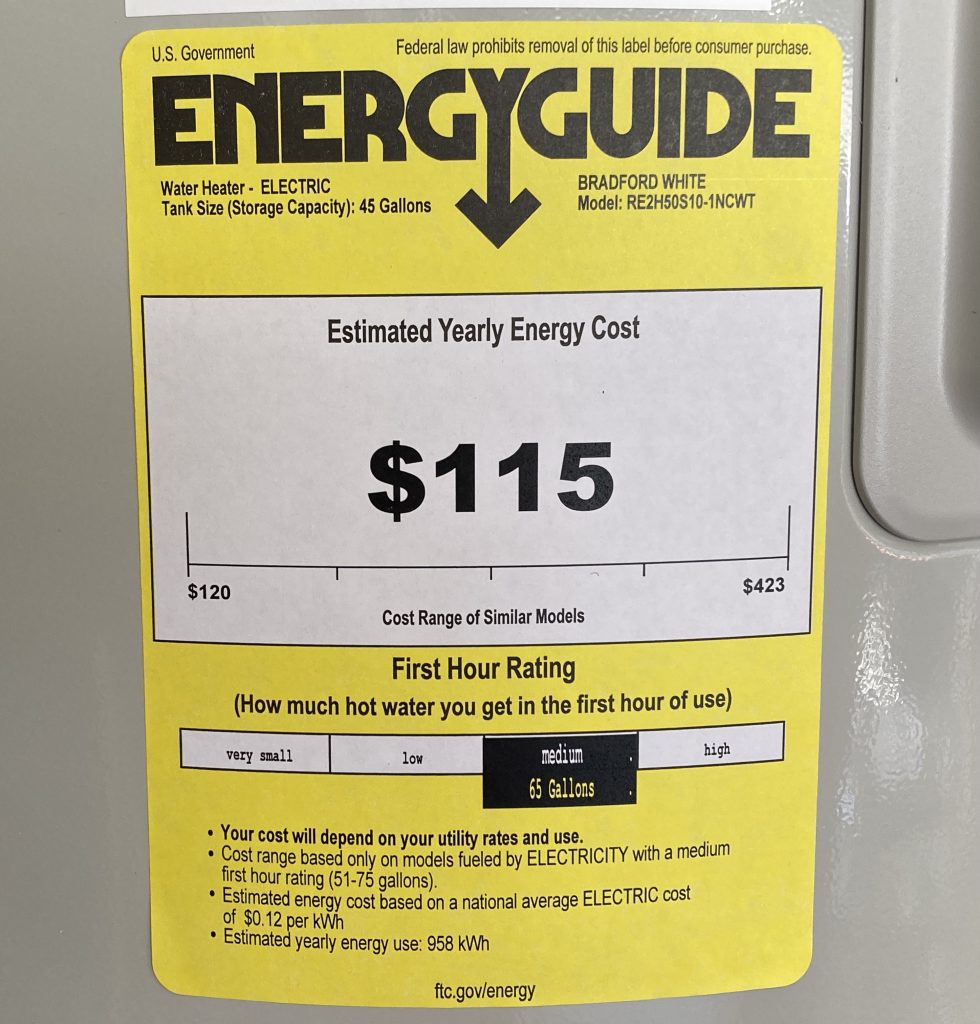
Our water heater is a Bradford White Model #RE2H50S10. It has three settings: heat pump only, hybrid, and electric. The most efficient setting is the heat pump only, which works when the ambient temperature is higher and hot water demand is lower. The hybrid mode will use the heat pump and when it can’t find enough heat to move, it will create heat through heating elements (like a standard electric water heater). That is why it is called a hybrid. The electric mode is useful if you have a lot of people taking showers at one time. This mode uses the heating elements to keep up with the demand. Afterwards, you can reset it to hybrid or heat pump only, or it will default back to hybrid within 12 hours if you forget to reset it. It is expected to use 958 kWh per year of electricity. In our colder climate, we estimate we use about 1500 kWh to power this unit.
Did you know that your water heater is one of the most energy intensive
systems in your home? According to the EPA, “If every residential electric
water heater in the country were replaced with a heat-pump water heater, 140
billion pounds of annual greenhouse gas emissions would be prevented,
equivalent to the emissions from more than 13 million vehicles.” Here’s a good
article on the subject if you want to learn more: https://www.thisoldhouse.com/plumbing/21015567/all-about-heat-pump-water-heaters.
We chose this water heater so we could use more of our solar power and less
natural gas to heat our water. This meant replacing our old natural gas system
with an electric one. We were waiting until our 20-year-old gas water blew up,
which it did over the winter. Fortunately, Scott had a backup on hand to get us
through until our hybrid could be produced and shipped to us (took about a
month due to Covid, but you can get one from another manufacturer at Home Depot
or Lowes immediately). Thankfully, Scott was able to install the 220-volt
circuit himself and our friend, Brad helped with the installation of the tank. So,
our labor costs are less than normal for making this switch.
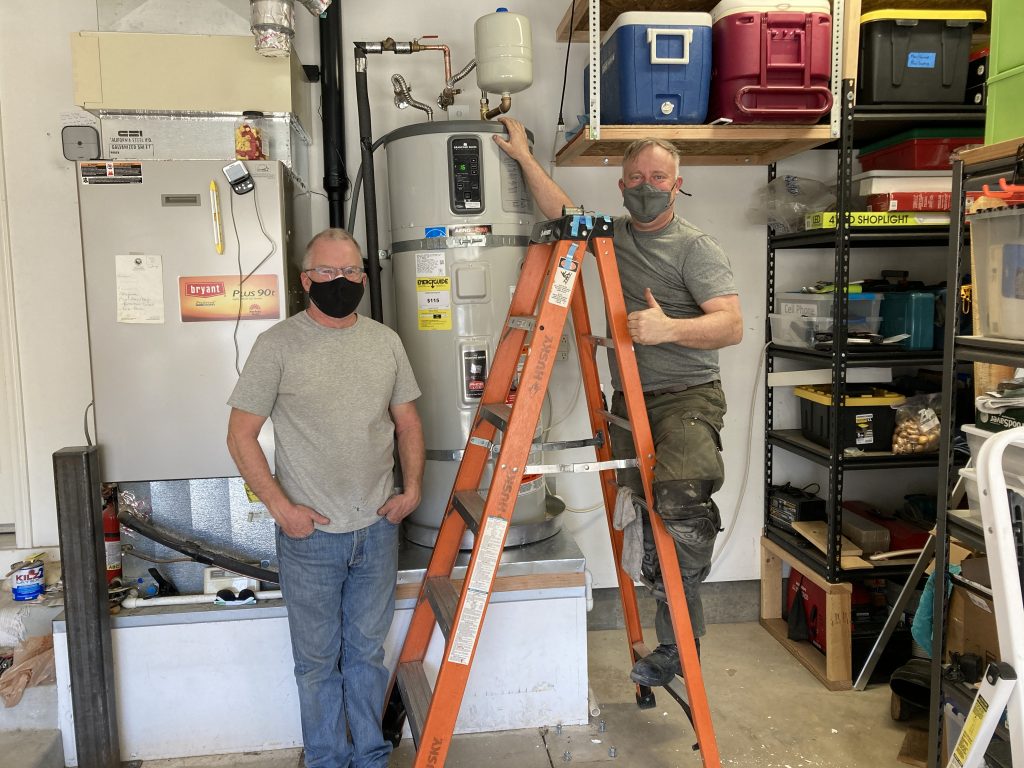
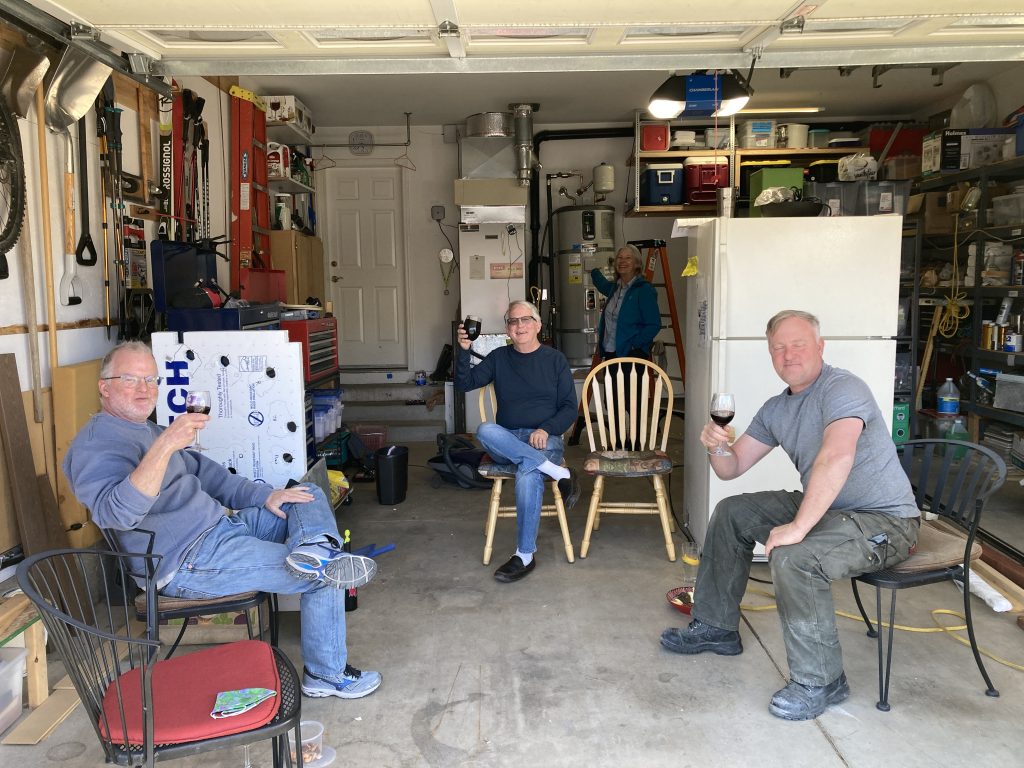
Brad and Scott celebrating a successful installation – April 2021 Bruce and Peggy joining us for a toast This baby is so efficient, she falls off the bottom of the range!
Here are the costs:
$1,428 Bradford White Model #RE2H50S10
+$600 Labor for Installation
=$2,028 Total
-$700 Less Cost to replace with a new gas water heater
-$300 Less Federal Tax Rebate
=$1,028 Additional cost of switching to a hybrid electric water heater
We will add this to our solar installation costs and see how long it takes
us to recover our investment. However, our main reason for choosing this system
is to reduce our carbon footprint by burning less natural gas to heat our
water.
Our heat pump water heater has been saving us about 235 therms of gas per year. Our average gas cost is about $0.50 per therm. So we save about $118 per year. That means the system will pay for itself in about 8.5 years. We hope it will last 20 years like the last one did-then we come out way ahead!
You might be wondering what a heat pump water heater can save your household. For a family of four, the Energy Star website estimates you would save around $330 a year on your electric bill, which adds up to a savings of around $3,400 over the life of a typical heat pump water heater. This is assuming you had an electric hot water heater to begin with-we had gas. An average new electric hot water heater costs between $300 and $600. If you already have an electric hot water heater, the additional cost (less the federal tax rebate) is only $500-$800 more. This would be paid for by your savings within 1.5-3 years. Plus, it’s so much better for the environment! (Ours was more expensive because we had to switch from gas to electric.)
Additional Information About Our Hot Water System
We are lucky to have a circulation pump system in our home, which helps us
use less water. This system gives us instant hot water, so we don’t have to run
a lot of cold water through the pipes, waiting for it to get hot. In our desert
climate, where water is so precious, it is nice to have. Depending on your
home’s construction, it can be added, but it is easier to do during new home
construction. If you are building a new home, this is something worth
considering.
Here’s Scott’s explanation and diagrams on how this works:
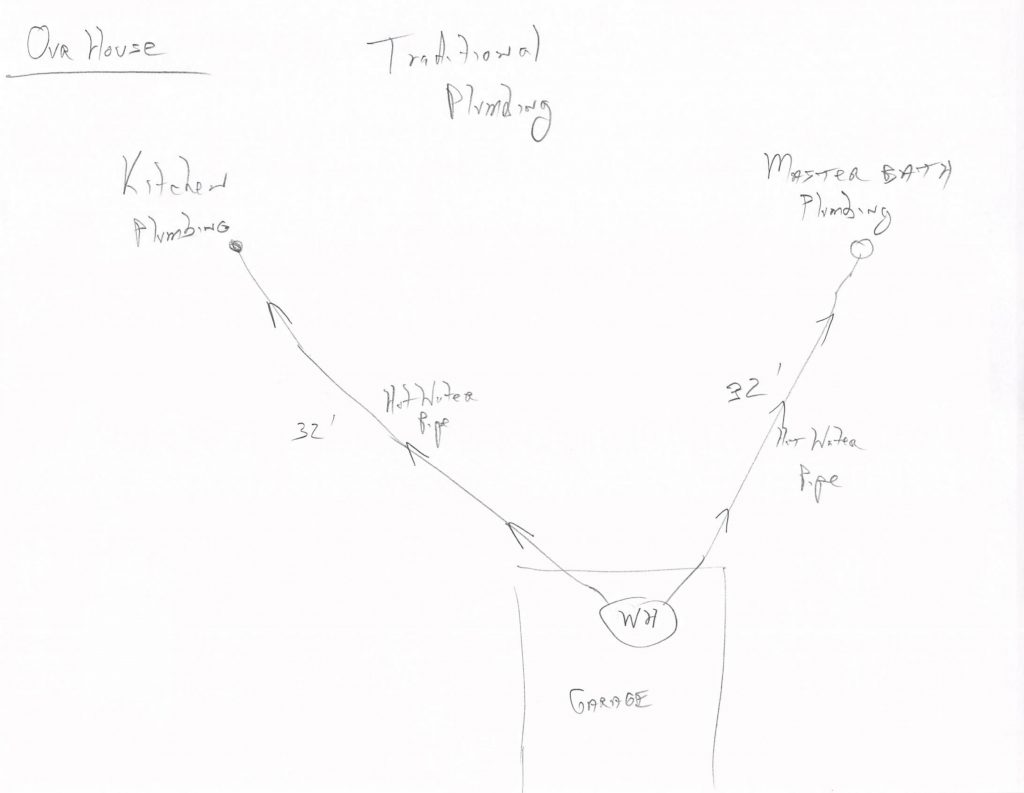
Traditional Plumbing Diagram
This is our house if we had a traditional hot
water system. The hot water heater (HWH) is in the garage and there would
be plumbing that extends, one way, from the HWH to wherever hot water is
needed. In our case, the master bathroom and the kitchen. (For simplicity
forget that we have a laundry room and a guest bathroom.) If we turn the
hot water on in either of these locations after not using it for an hour or
two, the water coming out is cold, so we have to run the hot water for a minute
or two before it becomes warm then hot.
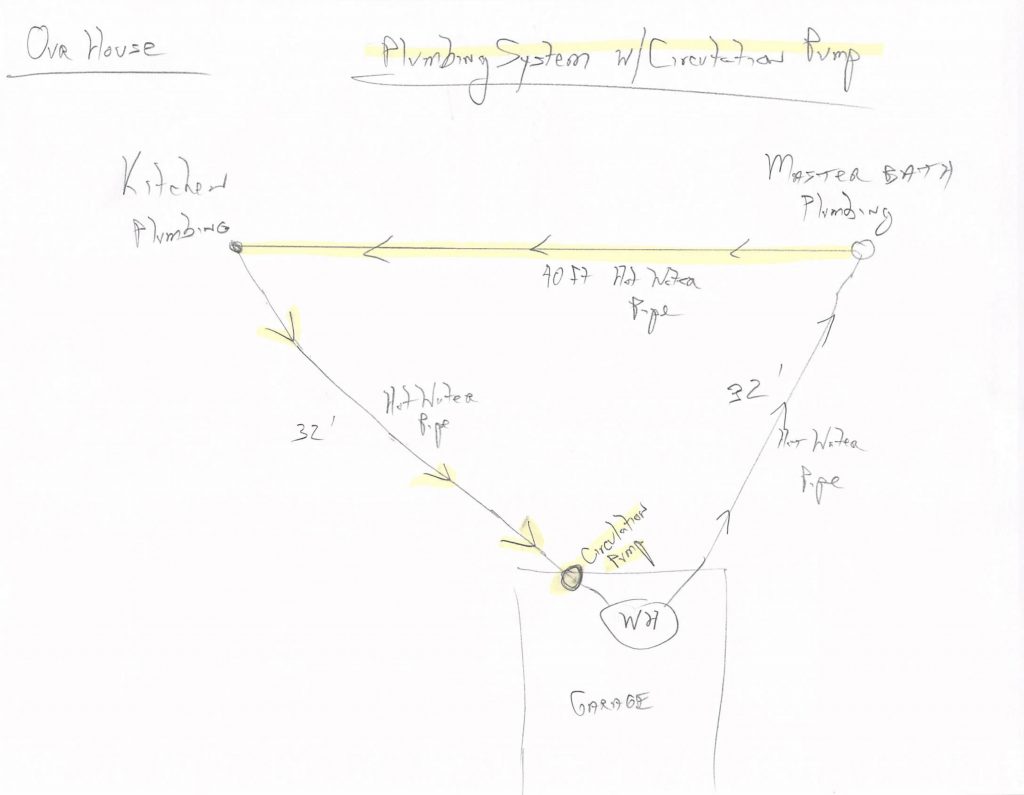
Circulation Pump Plumbing Diagram
This is how our house was built. There is
an extra hot water line (in yellow) that runs from the Master to the
Kitchen. This creates a hot water loop. There is a hot water circulation
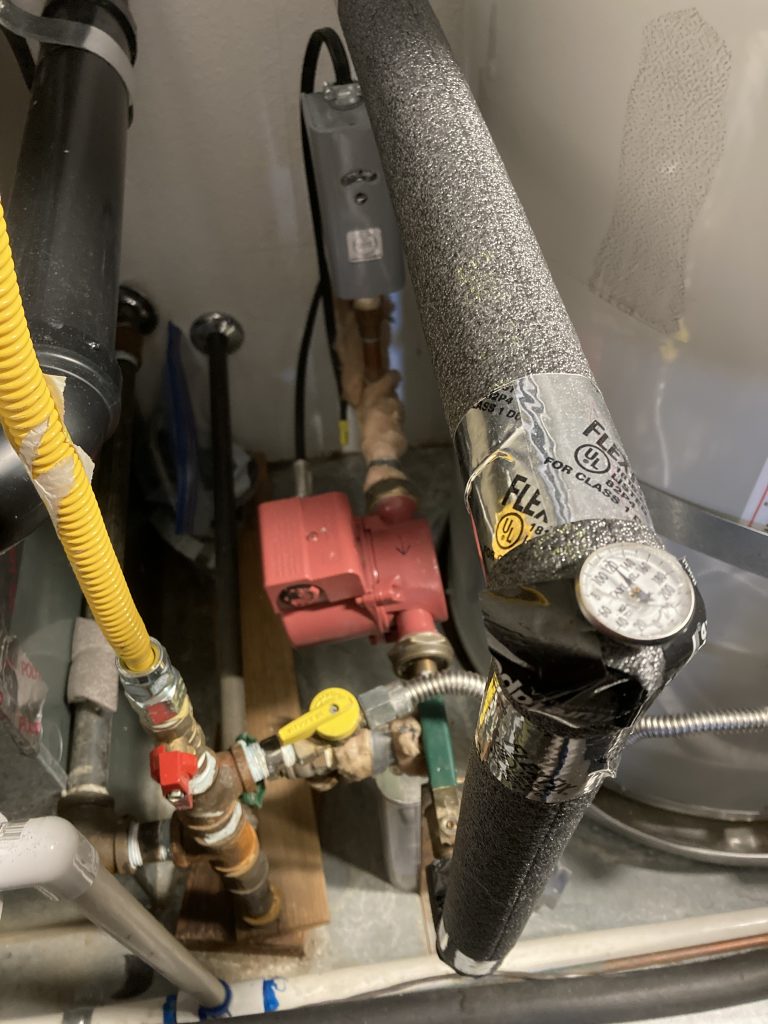
pump next to the HWH (red device in this “Circulation Pump” picture):
Our Circulation Pump
It continuously circulates the hot water
through the loop and then through the HWH. Anytime we turn the hot water
on in the Master or Kitchen, the hot water is piping hot. We do not have
to wait. This system is good in deserts like Nevada where water is not
abundant. We do not want people to let precious water run down the drain
waiting for it to get hot.
Scott has the timer set so the pump is off at
night when we are not using hot water.
Bottom Line After Four Years of Use
We love this heat pump! It is our favorite heat pump system and has reduced our use of natural gas the most and saved us the most money. It works as well as our old system did to heat our water, and an extra benefit is it cools off our garage in the summer by taking the hot air and putting it into the water. Very cool!
NOTE: This system does make some noise, so it is probably not a great system to have in the house where you can hear it. It works great in the garage.
IT JUST KEEPS GETTING BETTER! We continue to enjoy the thrill of driving the cars of the future, greatly decreasing our carbon footprint, using the sun to power more of our home and transportation, and watching the savings pile up. Of all our home improvements, going solar has been our best decision.
Our gratitude to Travis and the guys at Great Basin Solar (https://www.greatbasinsolar.com/) for the awesome job they did designing and installing our system!
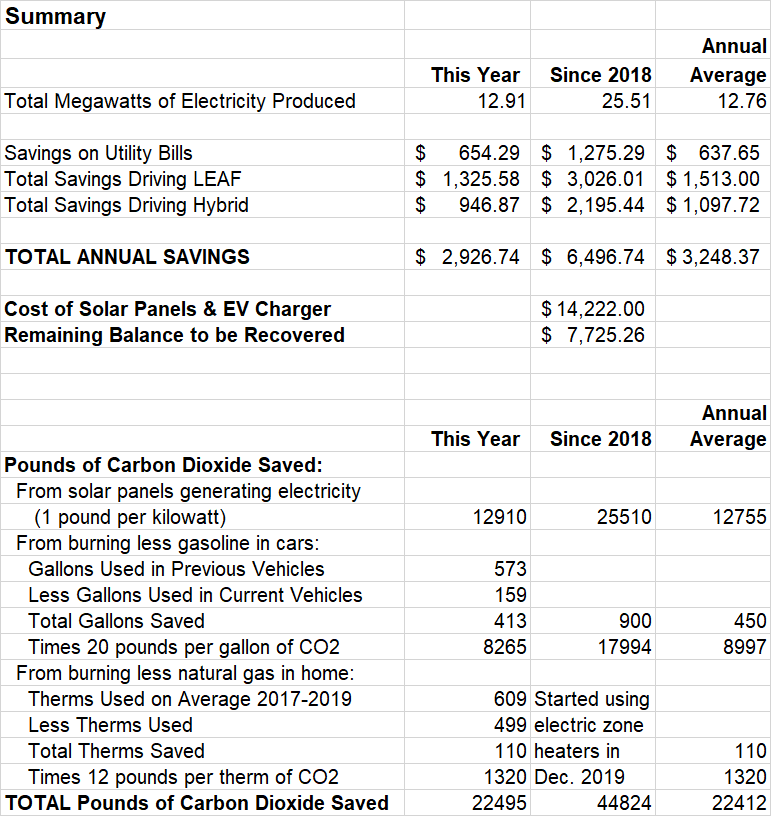
Here’s the summary for this year with cumulative data:
We produced about 13 megawatts of electricity in 2020, about 1 megawatt more than originally estimated. We saved almost $3,000 between our utility bills and the lower costs of driving electric and hybrid vehicles. At this rate, we will recover our costs in 2.5 more years. We also saved over 22,000 pounds of CO2 from entering our atmosphere, and a total of nearly 45,000 pounds over the 2 years since we installed the system!
This year I added in our CO2 savings from burning less natural gas in our home, due to using electric zone heaters during the winter. Next year we plan to replace our aging water heater and air conditioning unit with super-efficient electric heat pump models. The A/C unit will include a heater that extracts heat from the air to warm our home in the cooler months, reducing even further our use of the gas furnace. It will be fun to see how much more gas we will save in the coming years by making those two simple changes that we need to make anyway.
It is definitely driving the cars of the future that saves the most. For a fun read on what you can save by driving electric or hybrid vs. gas-powered vehicles, check this out: Article on cost and climate savings of Electric and Hybrid Vehicles. It includes information from MIT on a variety of different cars–the cost of driving them and their carbon emissions.
THE DATA
Electricity Production and Accumulated Credits
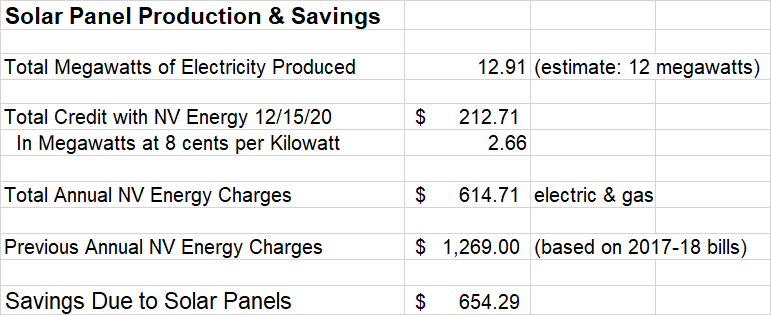
Our panels produced 12.9 megawatts, almost 1 megawatt over what Travis estimated when he built our system. We only slightly increased our banked electricity with NV Energy to 2.66 megawatts from 2.60, so we used almost all the electricity we generated this year. The difference was caused by (1) using electric zone heaters in the winter to reduce our gas usage, (2) plugging in a second refrigerator for most of the year due to stocking up to weather the pandemic and keep our parents supplied with groceries, and (3) running more A/C at night in the summer.
Averaging our 2017 and 2018 utility bills, we paid $1269 annually for electricity and gas. This year we paid only $614 for a savings of $654! We decided to look at our total utility bill, since we are now using electric heaters to lower our use of natural gas to heat our home in the winter. Next year we expect to use even less gas when we install the new heat pump systems.
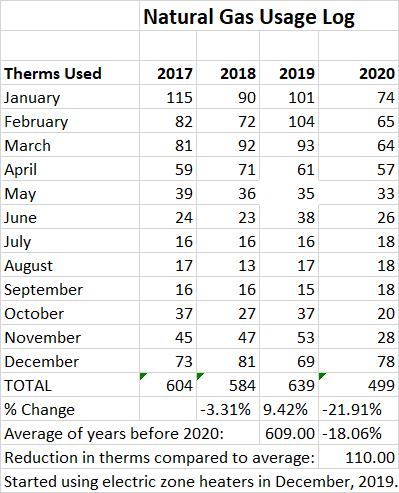
The Natural Gas Log is a record of our gas usage in therms. It went down 18% in 2020 for a savings of 110 therms and 1320 pounds of CO2. We are excited to see how much it will change when the new systems are installed!
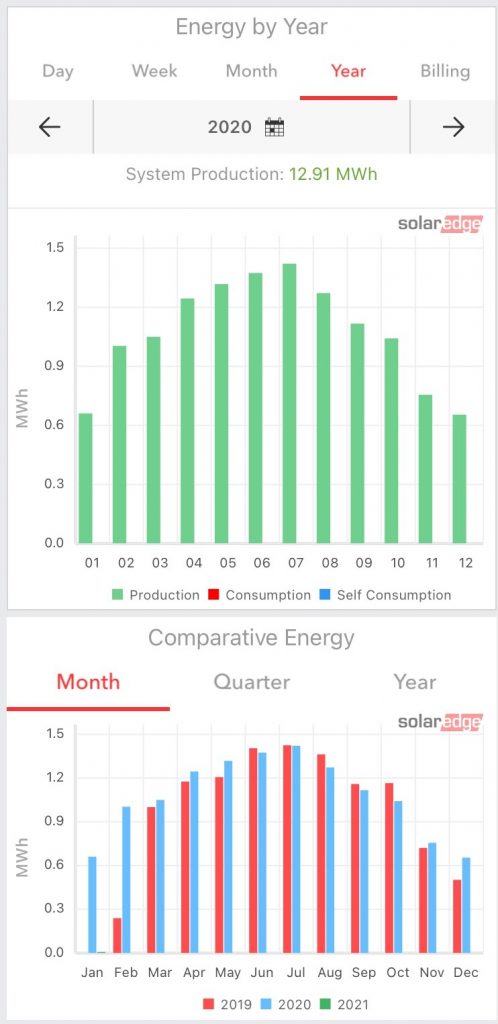
Above are the SolarEdge graphs showing our total production in 2020 and the comparison of 2019 and 2020. Our system didn’t go online until February 19, 2019. You can see that our lowest production months are November-January, which is when we are using the electric zone heaters and running Christmas lights. It’s during these months that we tap into our banked power with NV Energy. In the higher production months, we send more power into the grid, which is used by other households and increases our banked power.
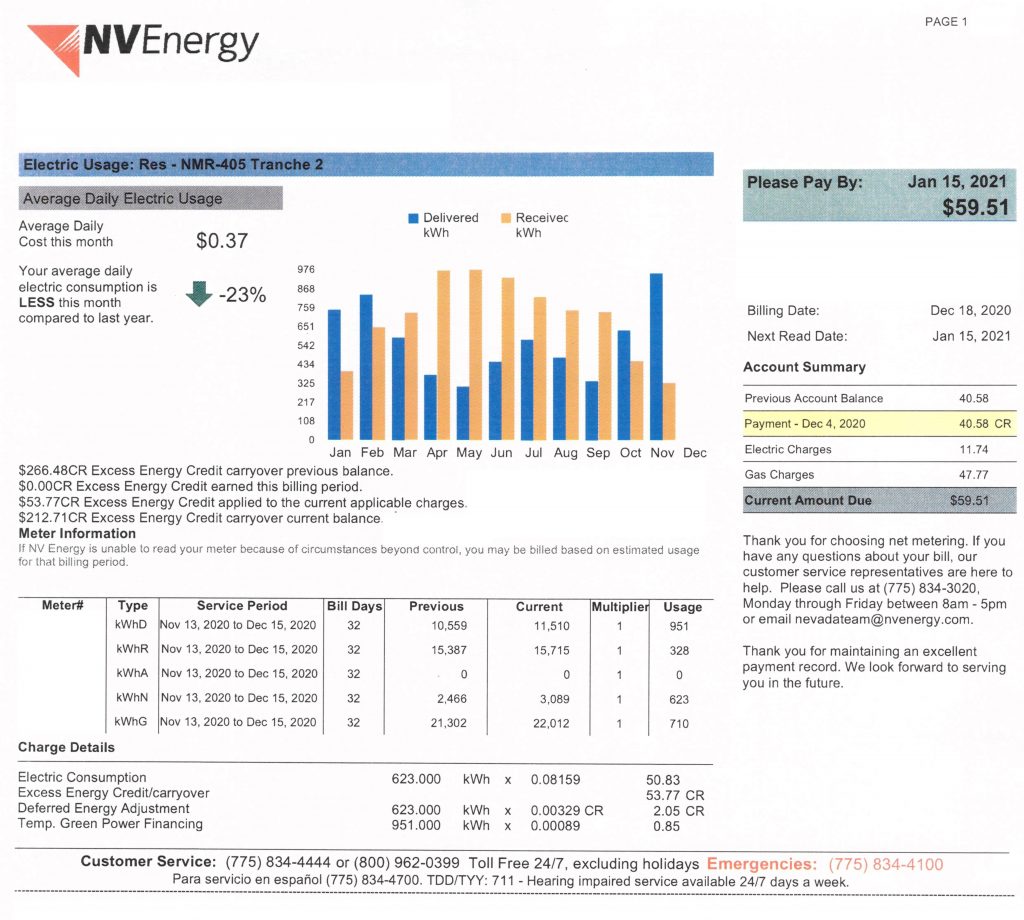
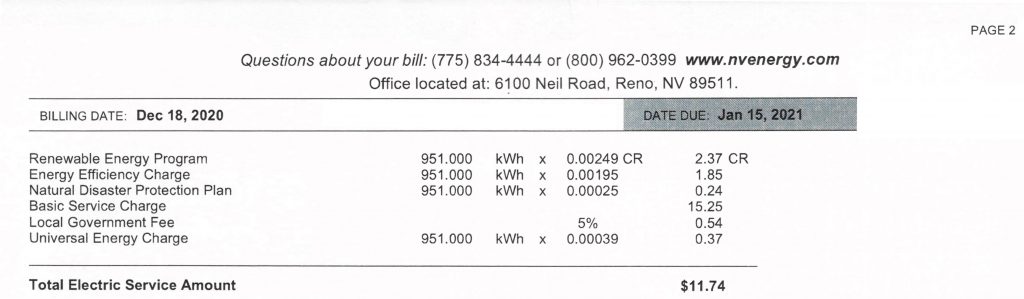
This is our December NV Energy bill showing our banked credit of $212.71 (line right above Meter Information). Divided by the 8 cents per kWh charge, the bank equals 2.66 megawatts of stored power. We used less electricity this December than last December, because we switched from incandescent to LED Christmas lights for the exterior of our house. We couldn’t believe it when we learned that 1 incandescent bulb uses the equivalent of 2 STRINGS of LED lights! OUCH! So, we ought to use a lot less electricity for the 6 weeks of Christmas lights.
The changes we made this year saved natural gas and used more of our solar power. Once the new systems are installed in 2021, we may start tapping into our bank. We’ve decided to monitor our electric use for a year and if we need to, we will install more solar panels.
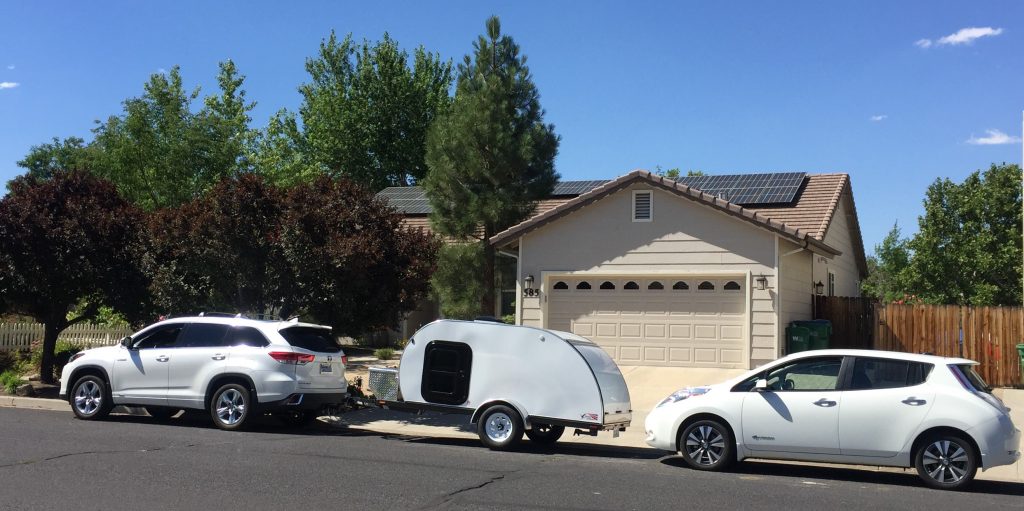
2016 Nissan LEAF
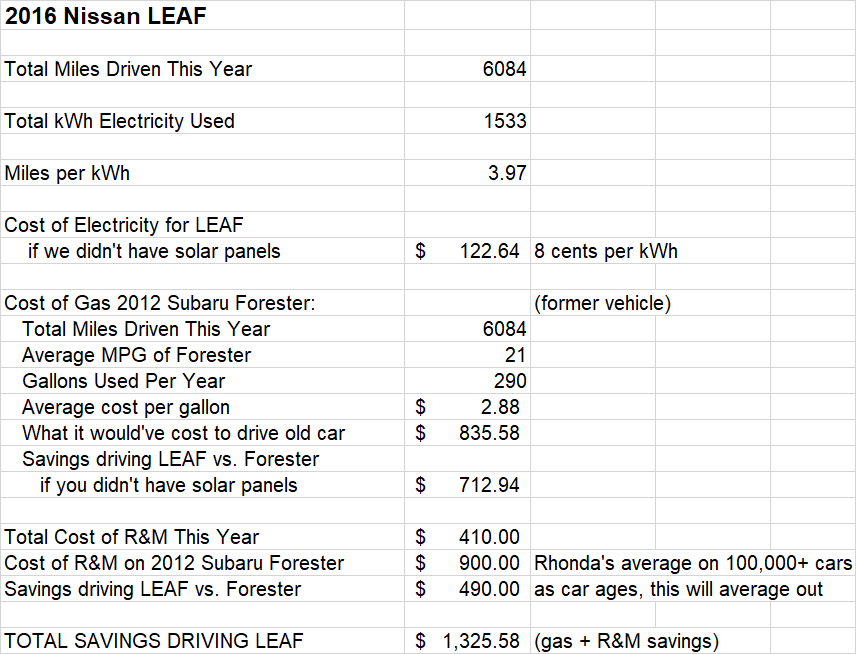
We are still loving driving our LEAF! We used BeeBee even more than the Highlander this year, since we didn’t travel long distances as much due to the pandemic. However, the total miles driven (6084) was about the same as last year. We used 1.5 megawatts of electricity to power her. If we didn’t have solar panels, it would’ve only cost us $123! That is a savings of around $713 over my old Subaru! (So, it pays to have an EV whether you have solar or not.) But, because we have solar panels, our savings is actually $836! Plus we saved 5800 pounds of carbon dioxide from entering the atmosphere (290 gallons X 20 lbs/gallon of gas).
We also saved money on repairs and maintenance. I have driven 100,000+ ICE vehicles for most of my life and they have high R&M bills, about $900 per year on average. This year the LEAF had her 30,000 mile check up, which is a big one, but it only cost $410. So the LEAF cost $490 less to maintain than my old vehicles. This brings the total savings of driving the LEAF for a year to $1,323! (NOTE: This will decrease as the car ages and the R&M bills get higher.) In future years, I will keep a running total of savings so you can see how owning an EV plays out over time. Most EV’s cost about 1/3 of an ICE to maintain due to not having engines and transmissions, and saving the brakes with regenerative braking.
We did lose one bar on the battery indicator this year, meaning that the battery pack is beginning to degrade. This is a normal occurrence and actually I’m surprised we haven’t lost more than one bar given that the car is now 4 years old. We have not noticed any change in our range, so that’s the most important thing. Nissan says to expect 10 years of battery life or 100,000 miles. Our LEAF has only about 34,000, so we should be good to go for long time!
The best part for us has been the pure joy of driving this car and knowing we are powering it with Nevada sunshine and emitting zero carbon and no pollution. We use it most of the time, saving the Highlander for when we need two cars or will be traveling out of the LEAF’s 100-mile range, which wasn’t much this year as you’ll see below.
2019 Toyota Highlander Hybrid
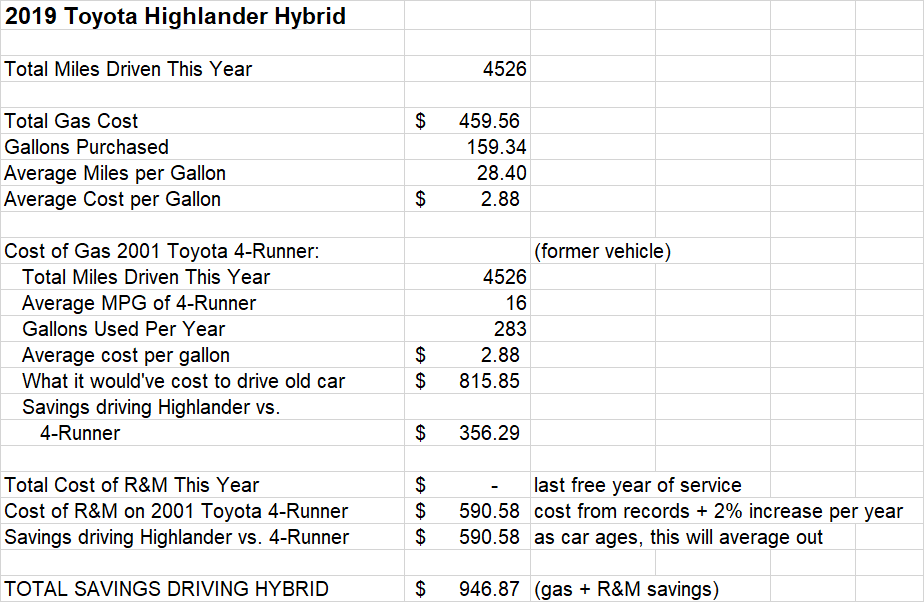
We also still love our Highlander–what a luxurious and smooth ride with lots of fun bells and whistles! We drove 4526 miles during 2020, significantly less than 2019, because we didn’t do long trips and used the LEAF more around Reno. We used only 159 gallons of gas, a savings of 124 gallons and $356 over the 4-Runner for the same mileage, and 3180 pounds of carbon emissions (159 gallons X 20 lbs/gallon). This savings does not take into account the fact that we drove less this year because of the pandemic. So, technically there was even more savings than the formulas above show. I think that was true for most of us. I loved all the data coming out this year that showed how much better our air quality was and how much less carbon we produced worldwide. It gave me hope that we can change our habits and have a healthier planet, which in turn makes us (and everything else living on Earth) healthier too.
The Highlander was still on its 2-year free maintenance contract with Dolan Toyota, so we saved the $590 average, inflation-adjusted cost we used to spend maintaining the 4-Runner. This brings the total savings of driving the Highlander to $947! Hybrids cost about 2/3 as much to maintain as regular ICE vehicles, due to the use electric motors and regenerative braking. We will see how this averages out over time.
This is our all-around vehicle and it continues to do everything we need it to. It is way more comfortable and pleasurable to drive than our old 4-Runner. The combo of the Highlander and the LEAF is perfect for us. We saved $2,273 and nearly 9,000 pounds of carbon from entering our atmosphere. We are thrilled with our decision to replace our old internal combustion engine (ICE) vehicles with the cars of the future!
Stay tuned for updates when we add in our hybrid heat pump systems this year!
We are still loving driving our LEAF! We used BeeBee even more than the Highlander this year, since we didn’t travel long distances as much due to the pandemic. However, the total miles driven (6084) was about the same as last year. We used 1.5 megawatts of electricity to power her. If we didn’t have solar panels, it would’ve only cost us $123! That is a savings of around $713 over my old Subaru! (So, it pays to have an EV whether you have solar or not.) But, because we have solar panels, our savings is actually $836! Plus we saved 5800 pounds of carbon dioxide from entering the atmosphere (290 gallons X 20 lbs/gallon of gas).
We also saved money on repairs and maintenance. I have driven 100,000+ ICE vehicles for most of my life and they have high R&M bills, about $900 per year on average. This year the LEAF had her 30,000 mile check up, which is a big one, but it only cost $410. So the LEAF cost $490 less to maintain than my old vehicles. This brings the total savings of driving the LEAF for a year to $1,323! (NOTE: This will decrease as the car ages and the R&M bills get higher.) In future years, I will keep a running total of savings so you can see how owning an EV plays out over time. Most EV’s cost about 1/3 of an ICE to maintain due to not having engines and transmissions, and saving the brakes with regenerative braking.
We did lose one bar on the battery indicator this year, meaning that the battery pack is beginning to degrade. This is a normal occurrence and actually I’m surprised we haven’t lost more than one bar given that the car is now 4 years old. We have not noticed any change in our range, so that’s the most important thing. Nissan says to expect 10 years of battery life or 100,000 miles. Our LEAF has only about 34,000, so we should be good to go for long time!
The best part for us has been the pure joy of driving this car and knowing we are powering it with Nevada sunshine and emitting zero carbon and no pollution. We use it most of the time, saving the Highlander for when we need two cars or will be traveling out of the LEAF’s 100-mile range, which wasn’t much this year as you’ll see below.
I wrote this blog for Reno Friends Meeting for January and decided I wanted to share it with you too. Wishing you all a happy, healthy, peaceful and Light-filled year ahead.
This is the time when sunlight returns to our winter world
and a new year begins. 2020 has been a year of retreat for many of us, clouded
by uncertainty and anxiety. We spent more time with ourselves than usual. I
have seen this year as an opportunity to go the “mountain”, to use a metaphor
common to many spiritual traditions. There has been less outward activity and
more inward reflection. But now the energy is shifting, and the time is coming
to re-engage with the “marketplace”—to bring our inner Light into the world.
I am fond of spiritual metaphors like the ox-herding
pictures used in Zen Buddhism to teach about the spiritual path. The seeker
wanders a path up the mountain looking for the wild ox, then finds and tames
it, rides it back down, comes home and enters the marketplace, bringing spiritual
wisdom and helping hands to the community. The ox is a metaphor for taming the
unruly aspects of ourselves, including our overactive egos and minds. Other
similar metaphors include Moses bringing the ten commandments down from the
mountain as instructed by God, Jesus spending 40 days in the desert before
giving the Sermon on the Mount, the wandering of the Jews in the desert before
coming to the Promised Land, and the vision quests of native peoples. In modern
times, we go on retreats, withdrawing from our normal lives and taking time for
spiritual reading and inner reflection. We hope to come back wiser, more
peaceful and compassionate.
What I usually find is that it is easy for me to be peaceful
and compassionate while on retreat; it’s when I return to the world that I have
trouble! So, I’ve been reflecting on how this lofty idea might be made more
accessible to us everyday folks. My experiment this last year has been to
incorporate Retreat Days into my schedule. Sadly, I’m here to report that I was
unable to retreat for a whole day despite the best of intentions. I did have
success in unplugging from news, but not from life.
Then I started wondering if there might be a more practical
way to do this ox-taming business, must be the Quaker in me… My new experiment
is taking mini retreats and then re-engaging with the world throughout the day,
seeking to bring Light and the Quaker testimonies into the world. I’m finding
this approach works much better and is more realistic given the nature of my
life. My hope is that over time I will be able to maintain centered-down peace
while I’m engaged with the world.
Here are some of my mini retreats:
Silent Worship whether in community or
alone—taking 30-60 minutes to sit quietly and listen for that still, small
voice within.
Sitting in easy repose and staring out the
window for a few minutes, turning off my brain.
Going on a walk or taking a swim and making it a
moving meditation, where I focus on the movement and get out of my head.
Doing Qigong, Tai Chi and/or yoga practice with
mindful focus. It helps to do this in a room set aside for this purpose or
outdoors. If I’m near my desk or the kitchen, I can get endlessly distracted!
It also helps to do just one pose or form if I’ve lost my center or need a
break.
Taking several deep, belly breaths.
Driving in silence.
Petting the cat.
Breathing and repeating a mantra while waiting.
Observing nature and letting myself become
absorbed into it.
Meditating using a mantra or following my breath.
Reading a spiritual book.
Here are some of the ways I try to bring Light into the
world:
Smile.
Listen with total presence, seeking to
understand.
Speak the truth from my heart, with compassion.
Be thoughtful in my actions and words.
Do random acts of kindness.
Practice peace, even when I disagree.
Seek unity; there’s usually some common ground
somewhere.
Be patient.
Love my neighbor without exceptions.
Live simply and in harmony with nature and those
around me.
Be a good steward.
Share generously.
Shine my Light, encouraging others as my equals,
to shine theirs.
Have faith and trust in the good in myself and
others, and Life itself.
Stand in my integrity with humble courage.
Be open-minded and non-judgmental.
Like any human, I stumble a lot, miss the mark, make
mistakes, get distracted. Then I get back on that ox and try again. I’ve come
to the conclusion that this is an ongoing experiment without end. I find that
comforting. Oh, and it helps not to take oneself too seriously and have a good
sense of humor!
Queries:
What are your ways to retreat from the world and reconnect
with the Light?
How do you bring Light into the world?
What distracts you from your highest intentions? Disturbs
your peace?
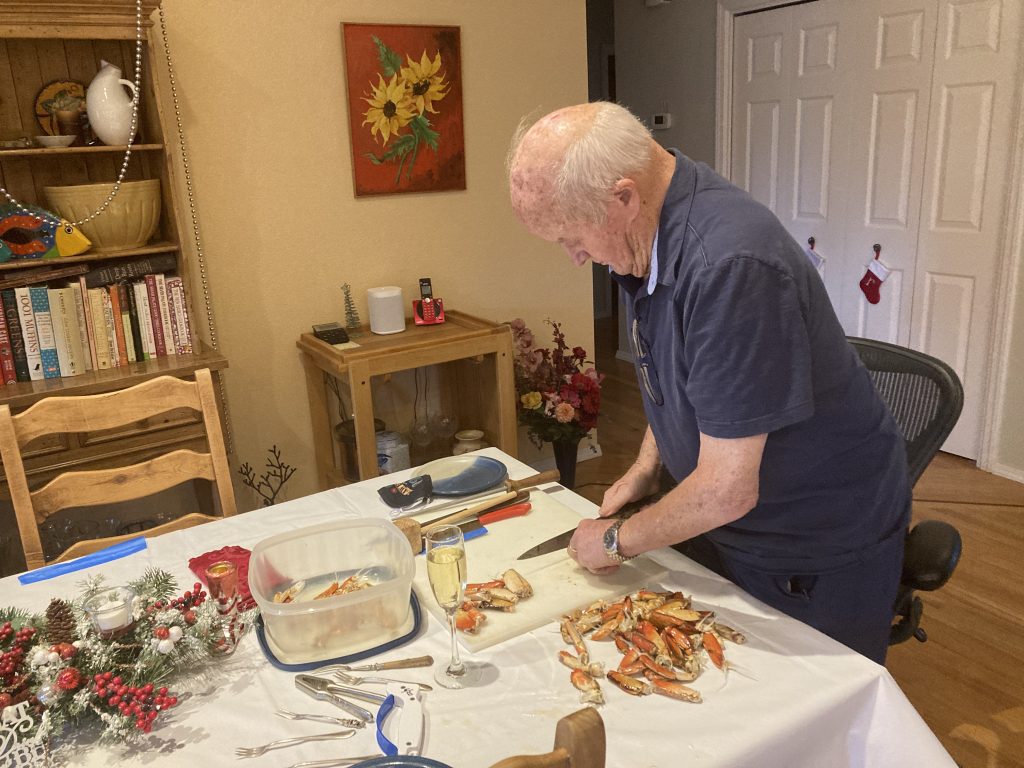
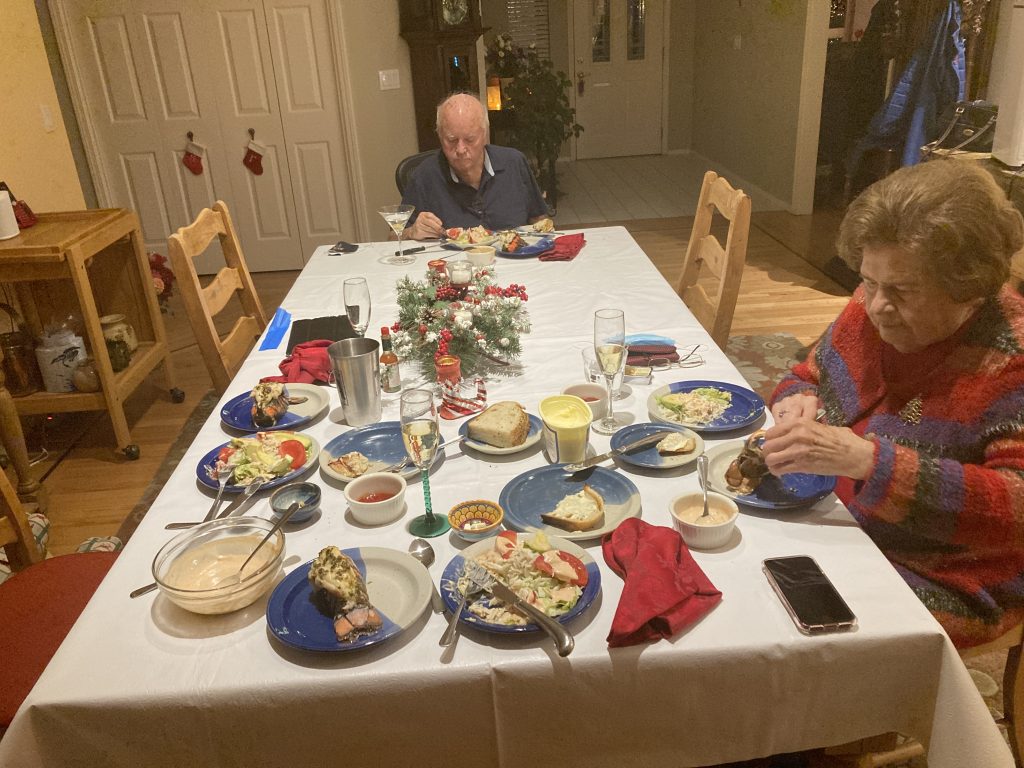
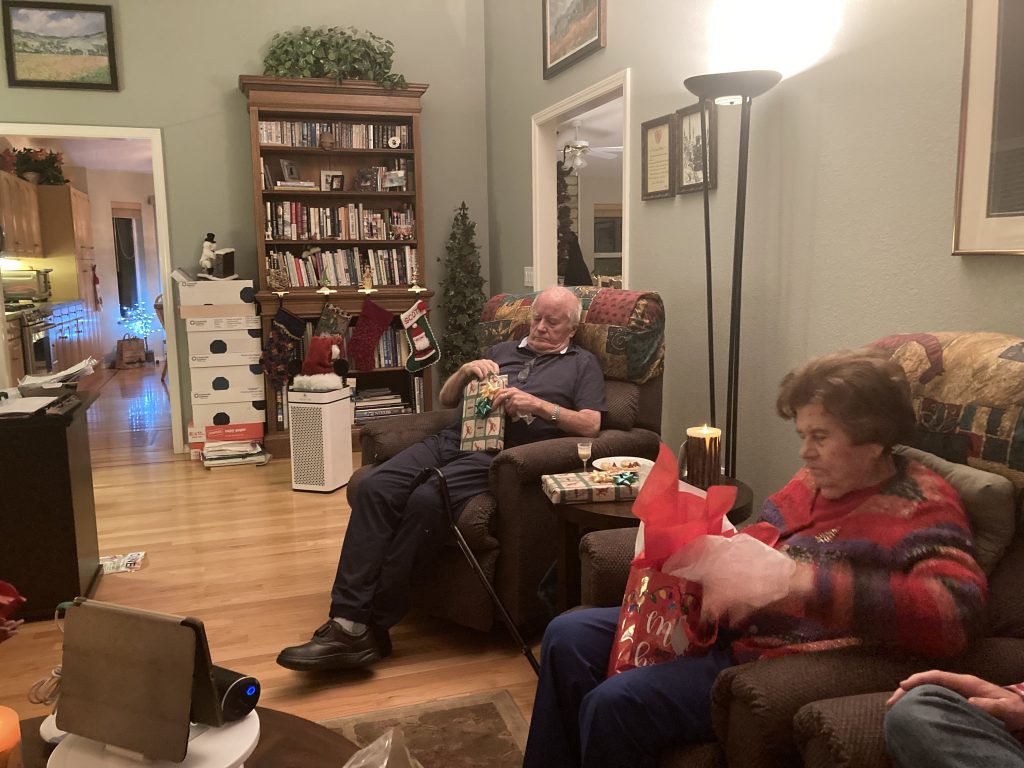
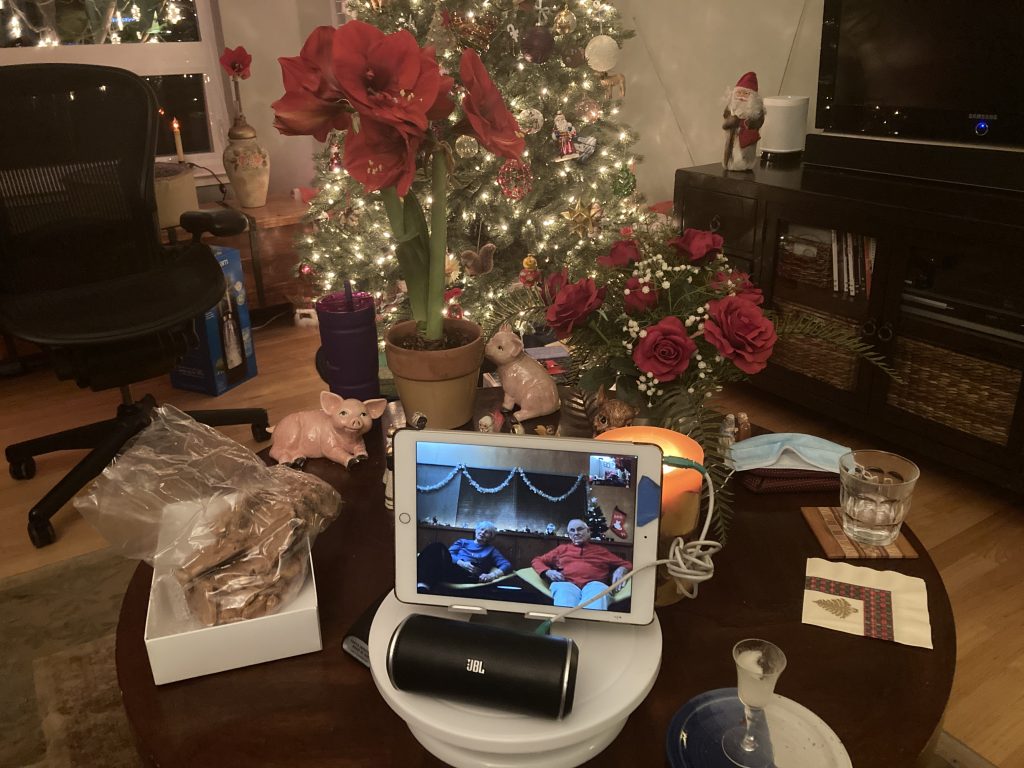
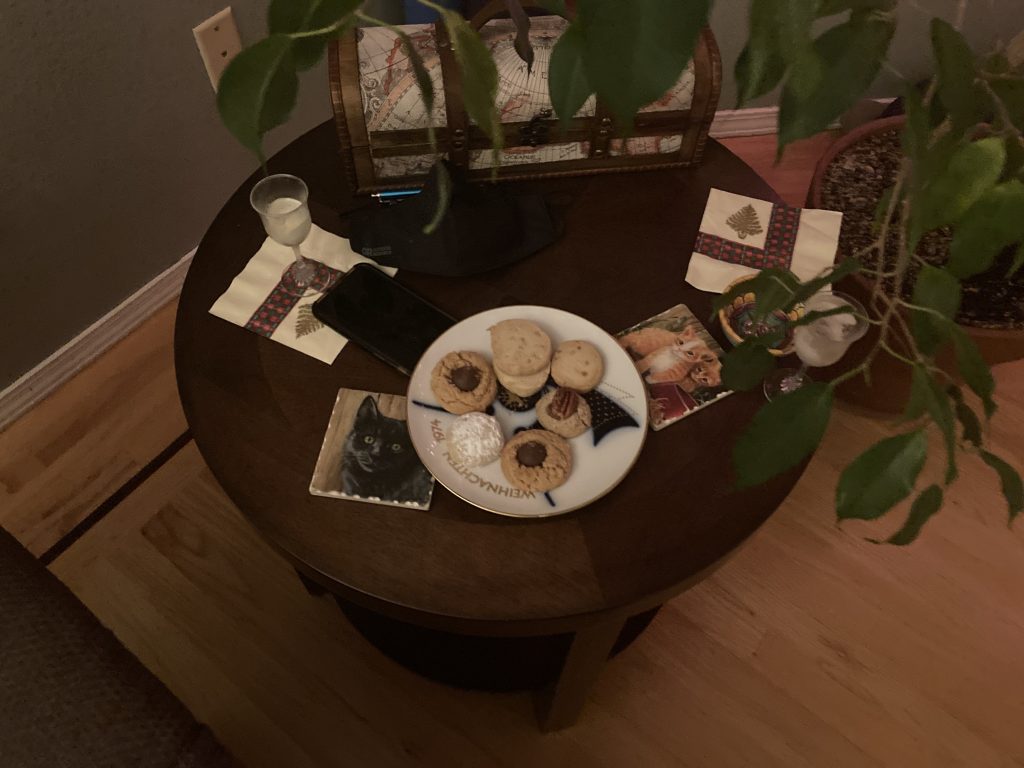
We were so blessed to be able to have both my mom and Scott’s dad with us for Christmas dinner. We followed the same protocols as Thanksgiving and had a safe and special evening together filled with love, seafood, champagne, cookies and eggnog! Here’s some of the highlights:
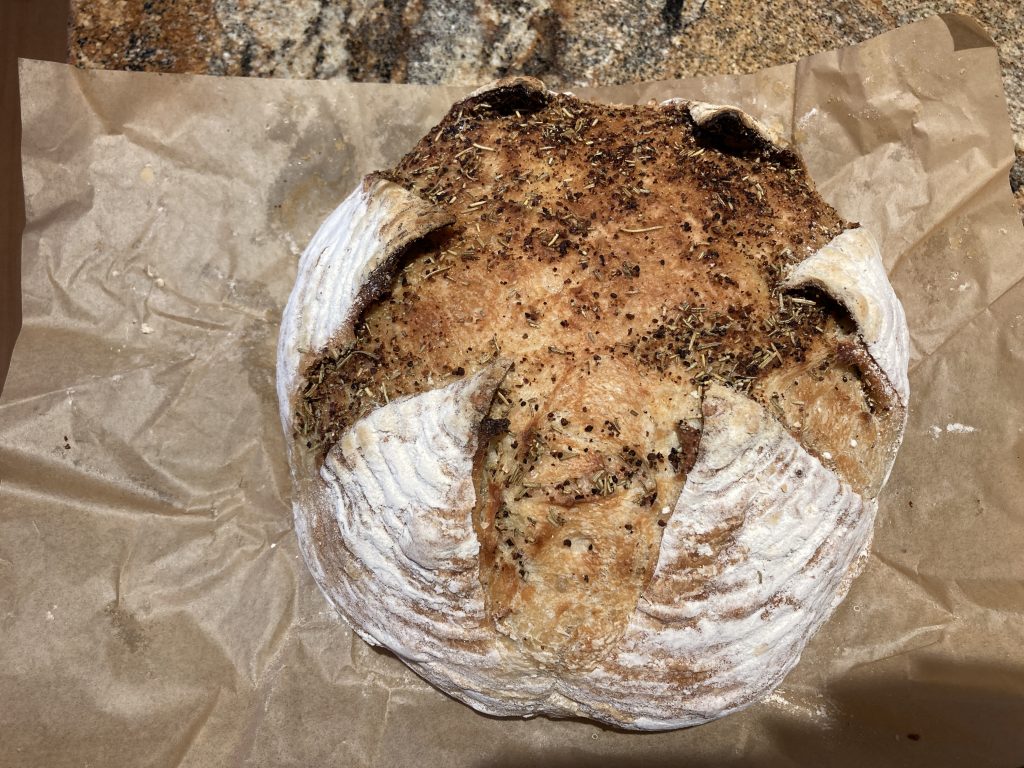
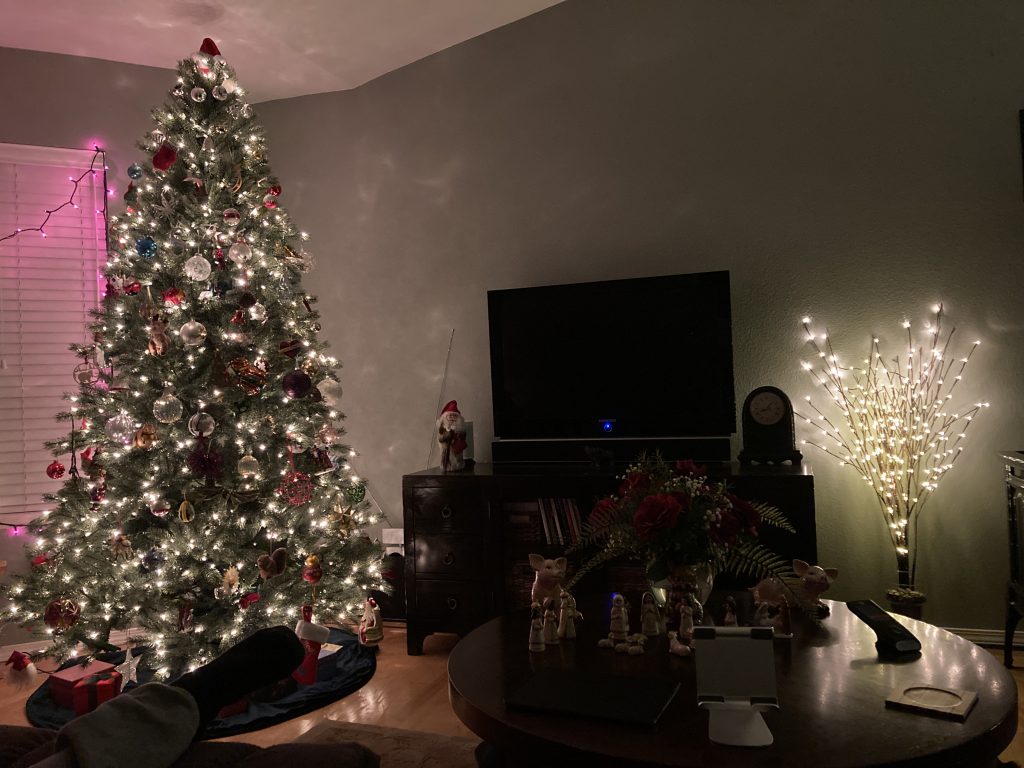
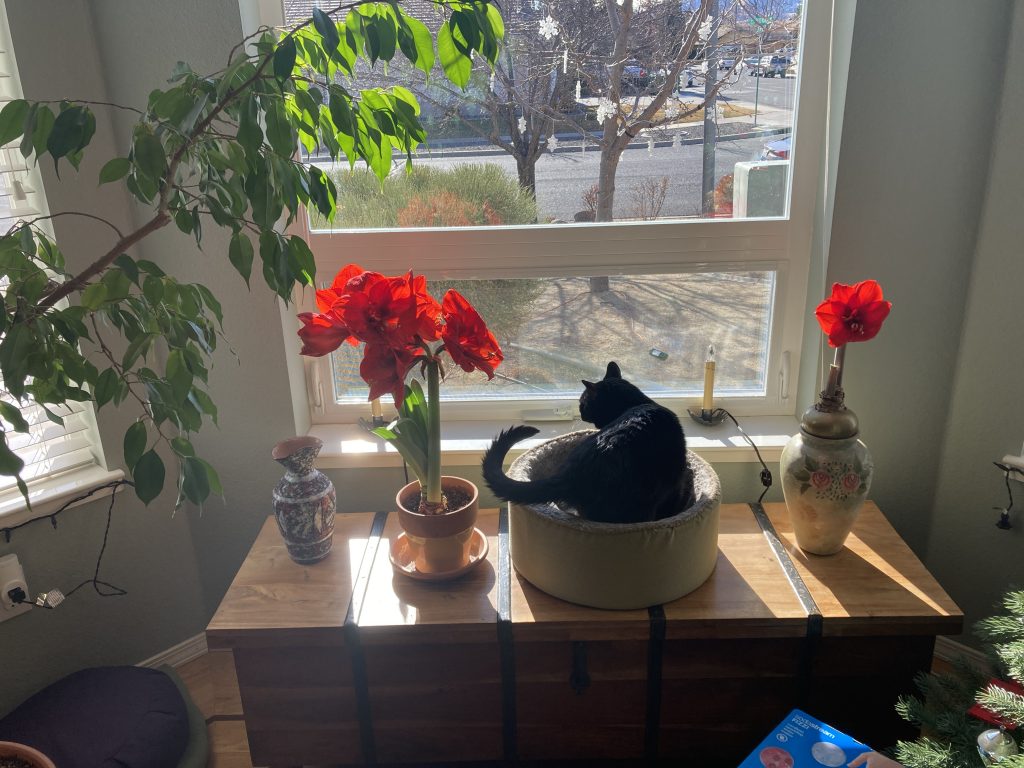
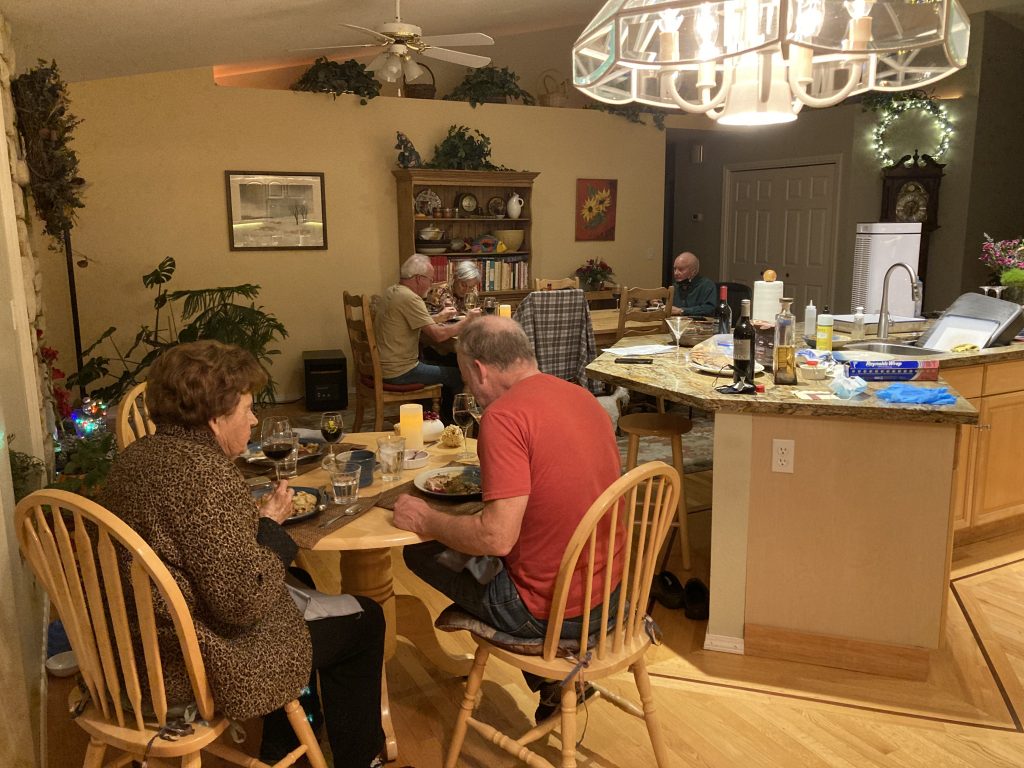
Jim cracking crab legs for our appetizerMom and I toasting with champagneMom and Jim enjoying crab Louie salads, lobster tails and sourdough breadScott getting ready to dig in!Sarah, our neighbor, brought us a freshly made loaf of her amazing herbed sourdough!Jim enjoying his martini and crab LouieRetiring to the living room for presents and dessert by the treeOur parents opening their giftsTalking to Aunt Nora and Uncle Harry on FaceTime This was only the second Christmas in their lives my aunt and mom were not together.Scott’s delicious cookies and Bruce’s (our neighbor) potent eggnog–a nice combo!Theo and the lovely Christmas Amaryllis the morning after Christmas
We are grateful that we were able to make this special memory together to mark the end of this crazy year. So far everyone is staying healthy in our family and we pray for that to continue as we do our best to stay connected and protected. We hope you were able to celebrate Christmas in your own meaningful ways. We pray for those who have suffered loss and illness during this pandemic and that it will soon be behind us.
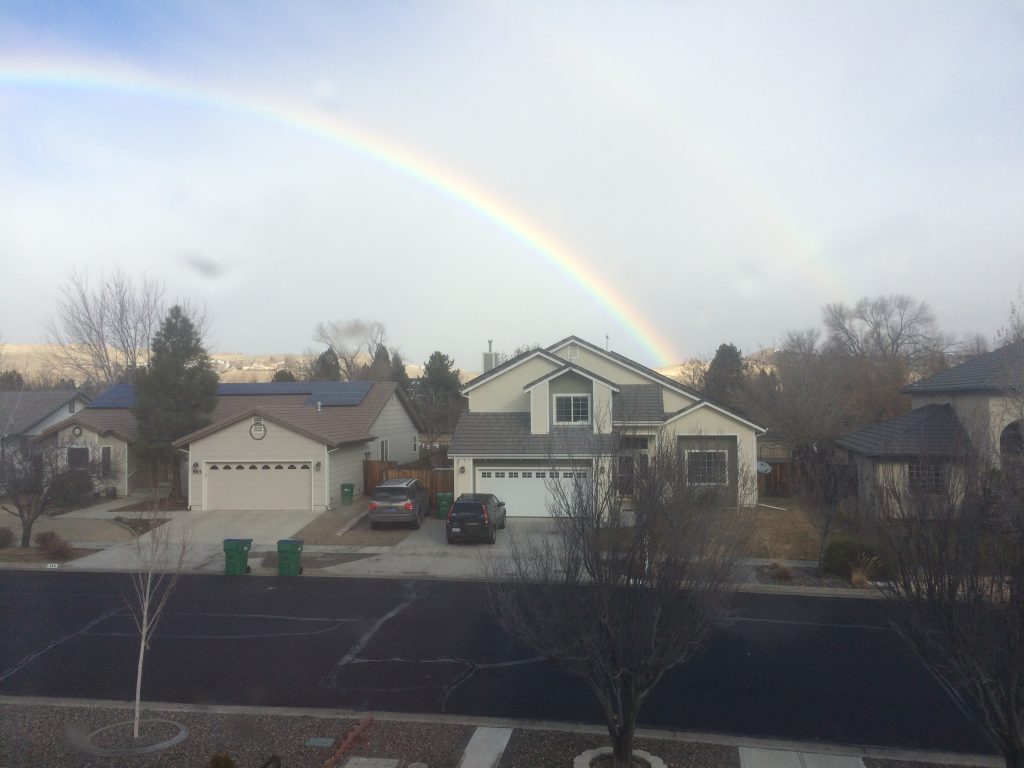
When we began this fateful year, a rainbow appeared on January 1st over our house:
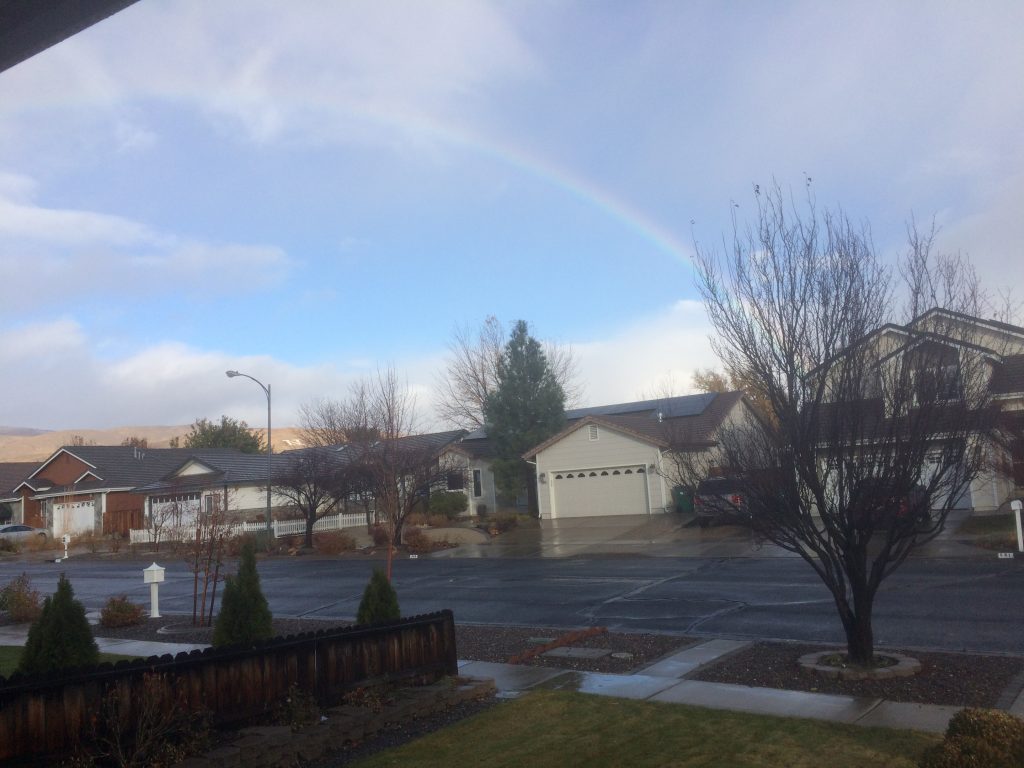
On November 18, another rainbow appeared:
I take this as a good omen that the storm is about to pass and the Light will return soon. In the meantime, take good care and stay connected and protected.
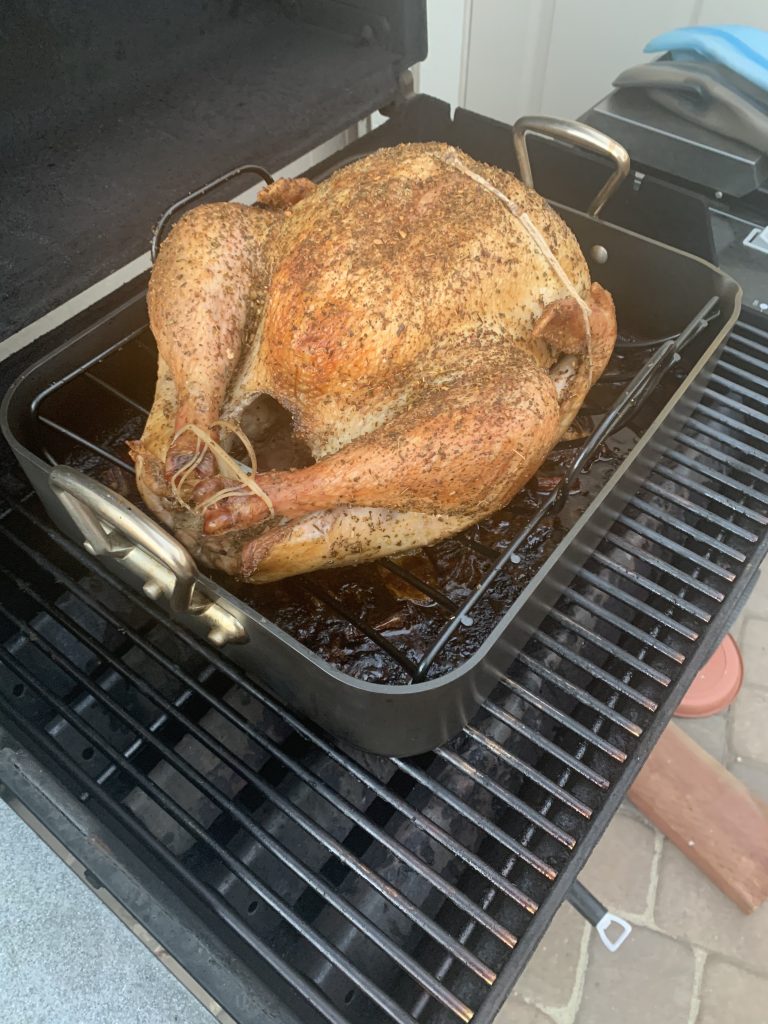
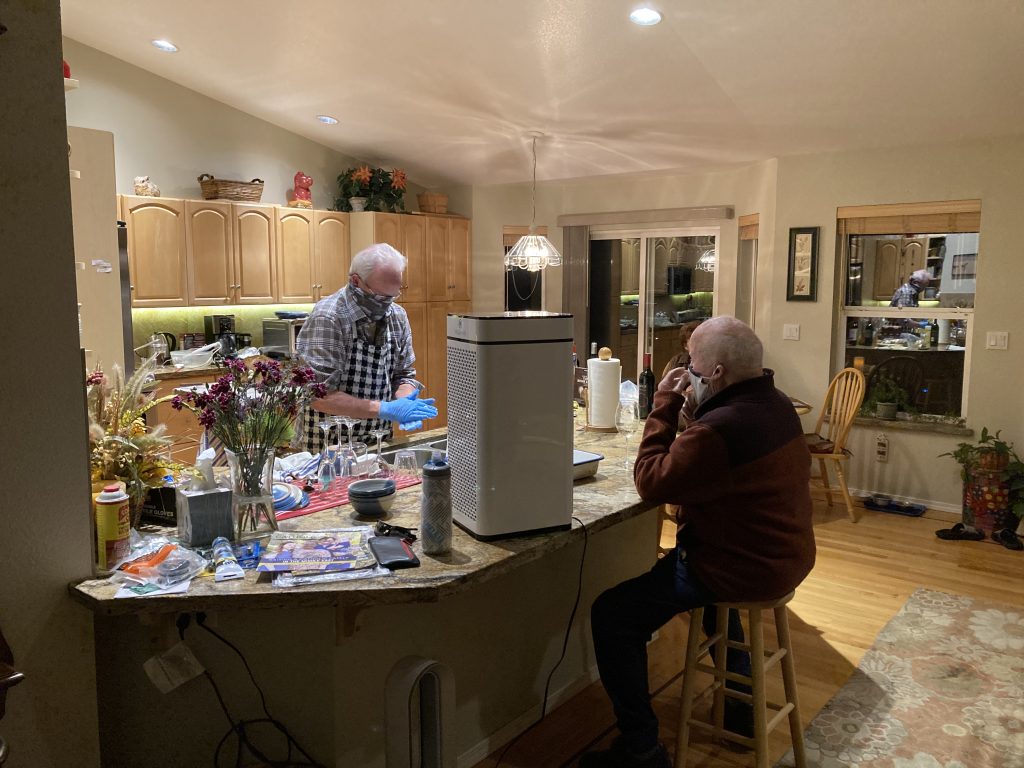
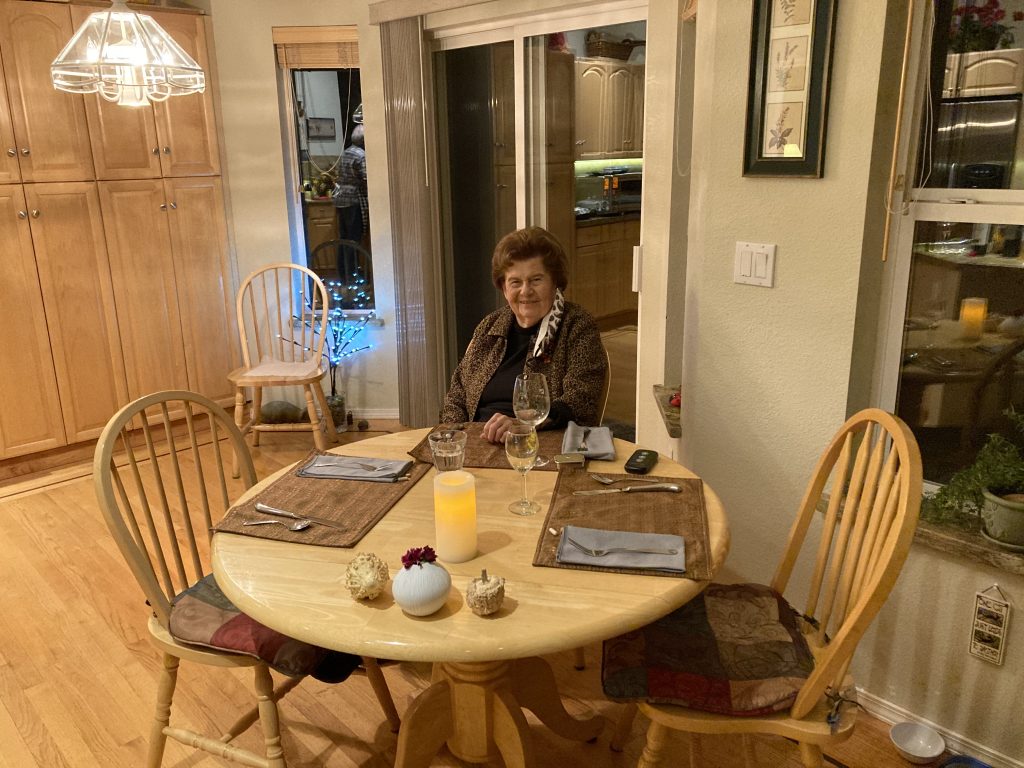
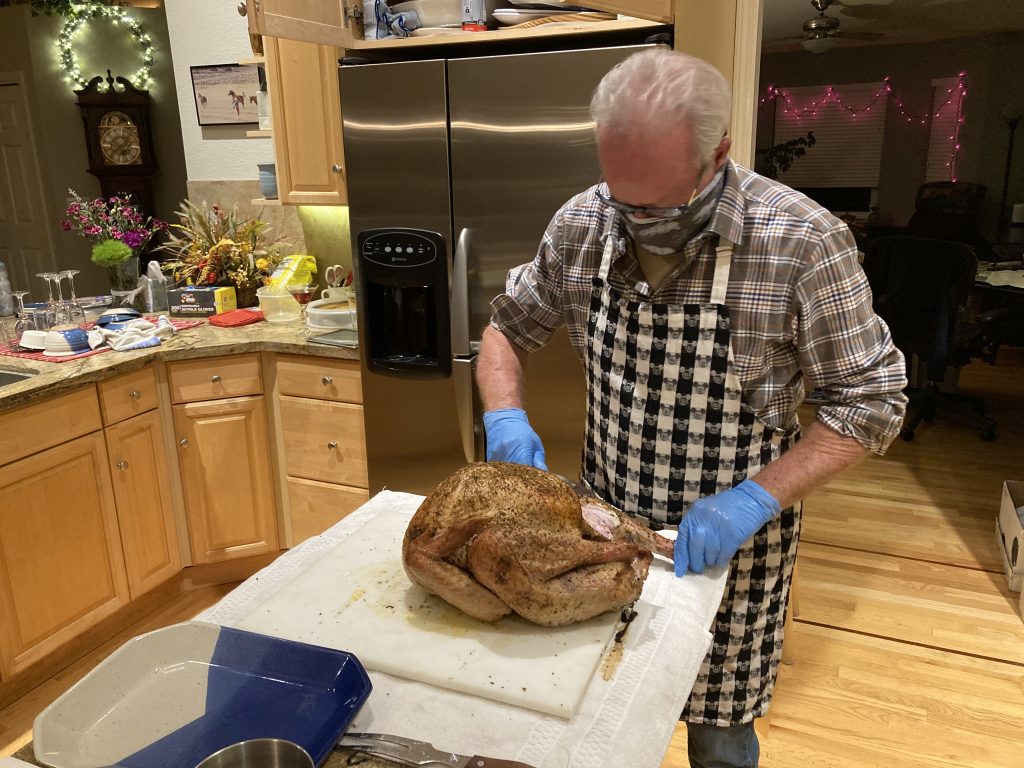
It is now two weeks after Thanksgiving and none of us have COVID, so I figured it was safe to do an update! We had a wonderful day cooking, visiting and doing our COVID safety dance around the kitchen and dining room. Jimmy showed Scott all the tricks for making his outstanding grilled turkey. It was truly amazing! He also brought his homemade ceviche and porcini spread over crostini for us to nosh on while we worked. We nipped on champagne and caught up with each other, wearing masks except when we were seated 6 feet apart eating. I made mashed potatoes and green bean casserole. Scott made his mother’s stuffing. Mom made a crustless pumpkin pie and Terri made pecan bars, which we topped with cream Scott whipped up in his KitchenAid.
It was a delicious meal! We so enjoyed being together that wearing masks was well worth the minor inconvenience. We ran the Medify air purifier and kept the windows cracked, using electric heaters to keep our parents warm.
Here’s some photos of the day:
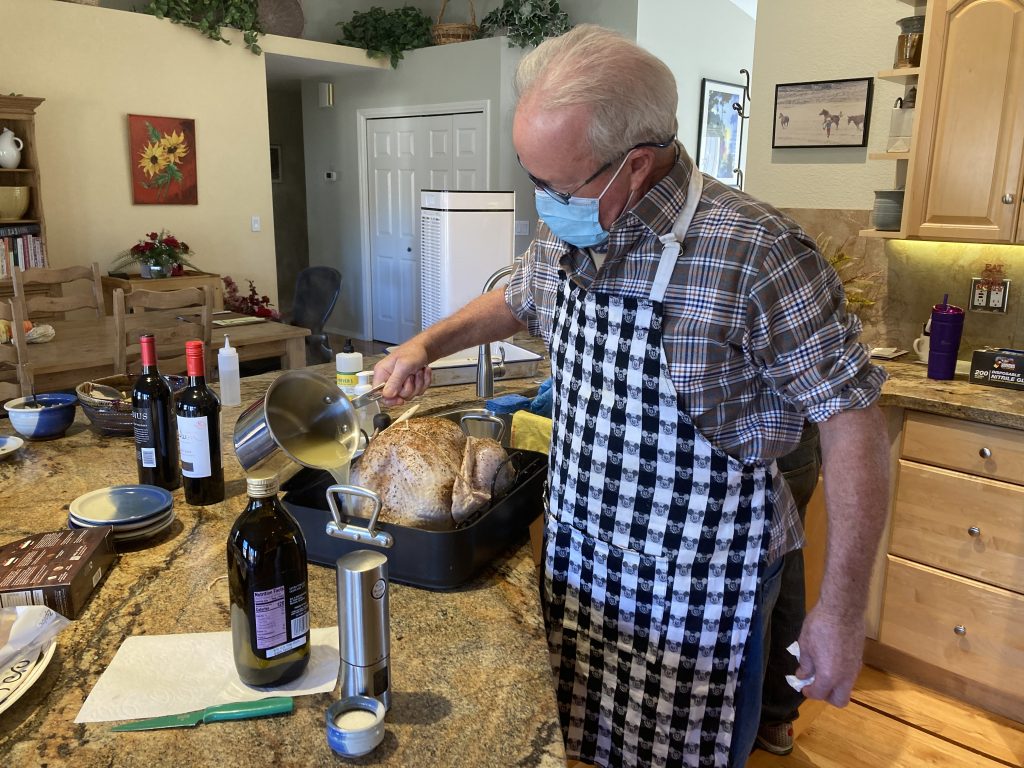
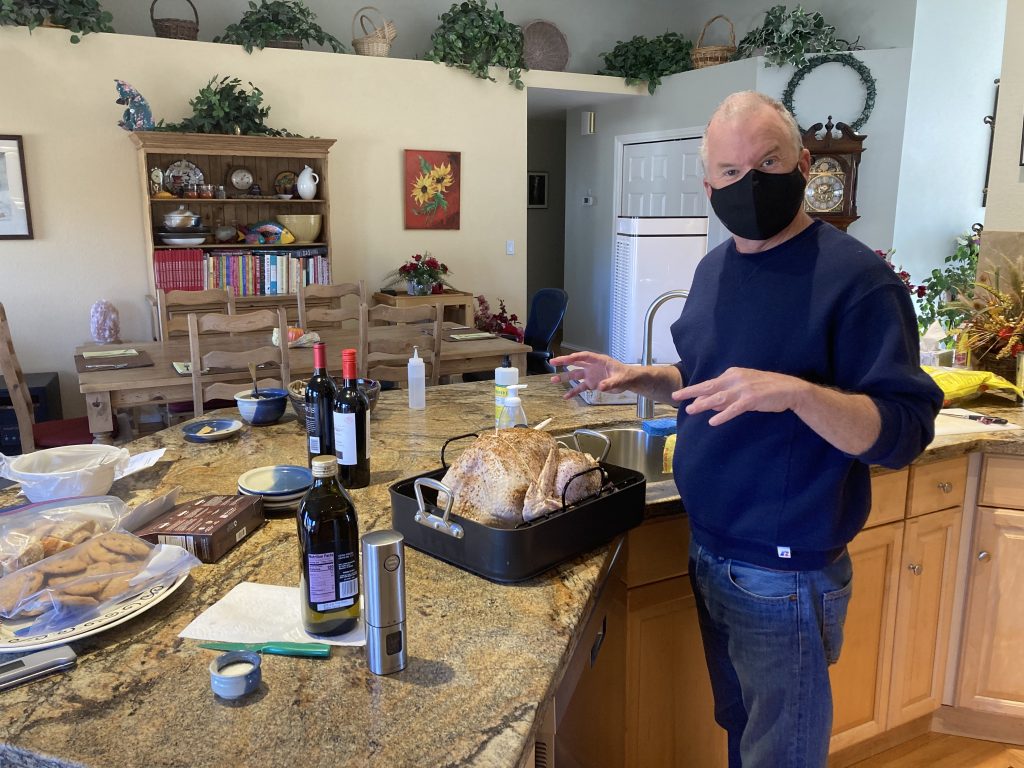
Jimmy preps the turkey for the grillScott assistsLook at that beautiful bird!Big Jim watches Jimmy do his kitchen magicMom sips wine while watching us cookJimmy carves the turkeyMashed potatoes and gravy on the stoveDinner is served!
I can’t believe I forgot to take dessert pictures! Sorry about that.
Looking back, it was an awesome day and I’m happy we decided to go ahead with our plan to be together while practicing our COVID protocols. As long as we all remain healthy and it is allowed, we plan to have Christmas dinner with Scott and I and both our parents. The menu plan so far: deep fried artichoke appetizers with champagne, crab louies with fresh dungeness crab, broiled lobster tails, and our neighbor’s homemade herbed sourdough. We will finish up with Scott’s Christmas cookie platter. I can’t wait!
Stay tuned for an update in January. In the meantime, take good care, be safe and stay connected to those you love. Wishing you a Happy Christmas and a Peaceful, Healthy, Happy New Year! (I don’t think any of us will be sad to see this one go.)
I find myself thinking about how to do this a lot lately, as I watch the COVID-19 cases climb in my community, the country and the world. I recall the epidemiologists saying that the worst wave would come during the fall and winter months and that we needed to be prepared for that. Most of us are tired of the pandemic and yearning to get back to the way things were. It’s tempting to throw caution to the wind and have holiday gatherings. We always feel safer with those we love, so this virus is particularly insidious because that’s our biggest vulnerability right now. Especially with colder weather and most of us gathering indoors.
So what do we do? There are lots of options, and like most things in life, they exist on a continuum of risk. We all have to decide where we are on the continuum as we make our holiday plans. I thought it would be interesting to blog on the subject, share my own ideas and invite you to share yours as comments.
Of course, the safest thing is don’t gather. Stay home with your immediate family members. Use technology to connect with loved ones, like Zoom (lifting its 40 minute limit for Thanksgiving), FaceTime, Google, Skype, WhatsApp or just a phone in speaker mode. I know some folks who are cooking the same things and then eating together remotely. Some are dropping off favorite dishes, safely prepared at the door–a kind of remote potluck.
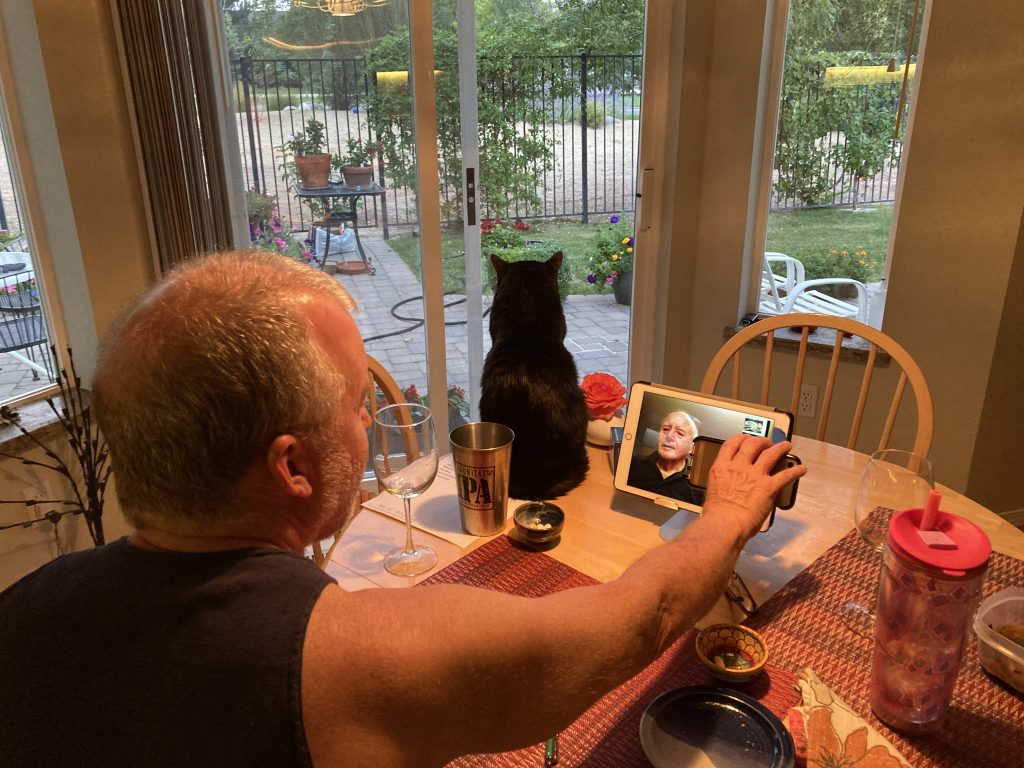
Scott and I often have dinner with his father, Jim using FaceTime on an iPad
The next safest thing is eating outdoors if weather permits. You can use outdoor heaters, blankets, warm weather clothing. I understand the Norwegians say that, “There is no bad weather, only bad clothing.” Be careful about sharing dishes and utensils. It’s best to have a designated server who is masked and has sanitized hands. Alternatively, you can have everyone bring their own everything if you want to be real safe.
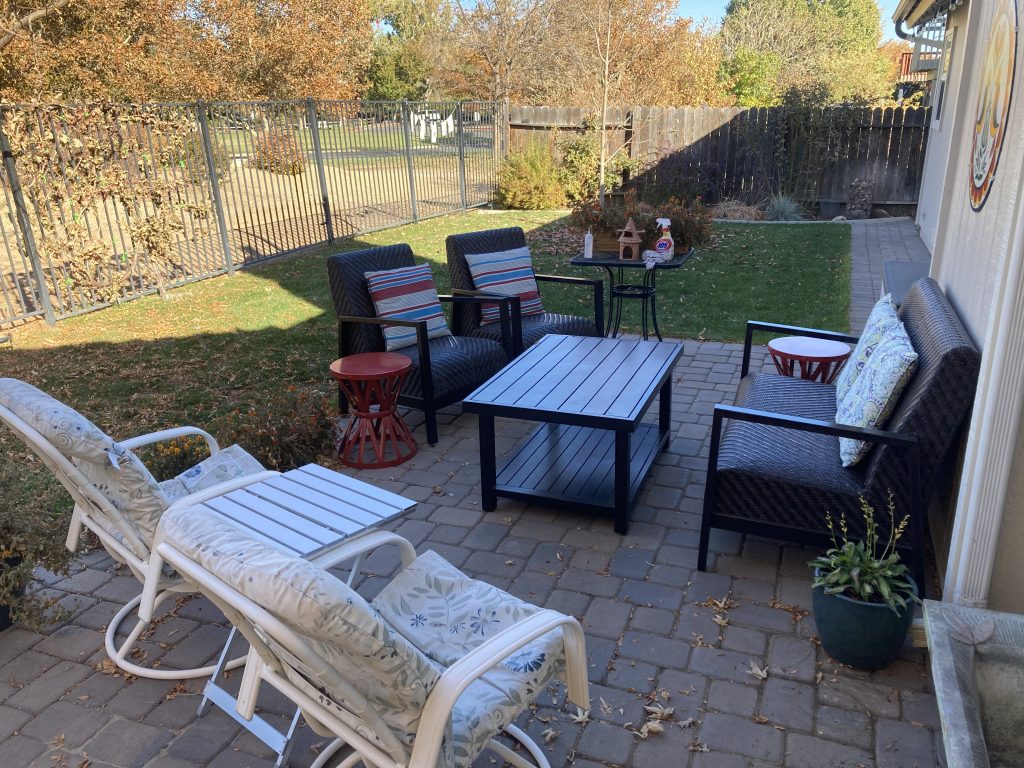
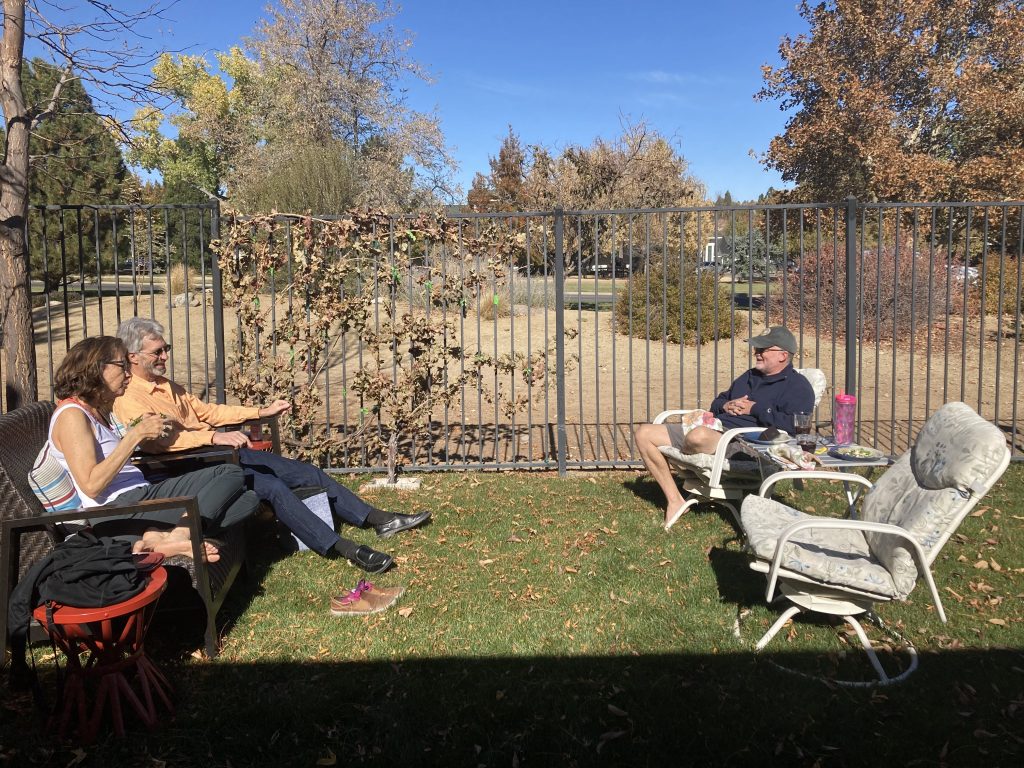
We spent much of the summer and early fall months doing this in our outdoor living room area, keeping households 6 feet apart and often bringing all our own food, drinks, plates, utensils. We did prepare food for others sometimes and bring it out on plates. I confess sometimes we goofed and passed around condiments or other items we shouldn’t have. Later we would realize we had made a mistake. It has been a learning process.
Our outdoor seating area with social distancingA fall gathering with friends out on the lawn–chasing the sun!
Then there are the decisions about who we spend time with indoors, which is the riskiest environment. We have always treated my mom, who is 85, as one of our household because she depends on us for essential care and also for company (she lives alone). We talked with her about the risks, even though we are careful. She decided she would rather take the risk and be able to spend time with us without masks and social distancing. This is similar to many people’s decision to socialize in pods. Our neighbors have a pod of three couples who are very close friends and have regular dinner parties with each other, but limit their contact with others outside their group.
Our neighbor’s pod at their Halloween party (used with permission and a promise to share part of my earnings off this very lucrative blog 🙂)
Recently, it has become too cold to gather outside and we know it will be impossible to do Thanksgiving and Christmas with our parents outdoors. Scott’s 95-year-old father lives in a senior, independent living community and prior to October was not able to come out for meals with us. Since March, we have been doing happy hour or dinner with him daily on FaceTime. In October we were able to take him to an outdoor lunch in Truckee with my aunt and uncle, making sure we all wore masks in the car. In November we brought him to our house for Veteran’s Day (he is a WWII and Korea vet). Again, we discussed with him the risks and like my mother, he decided it was worth it to him to take the risk.
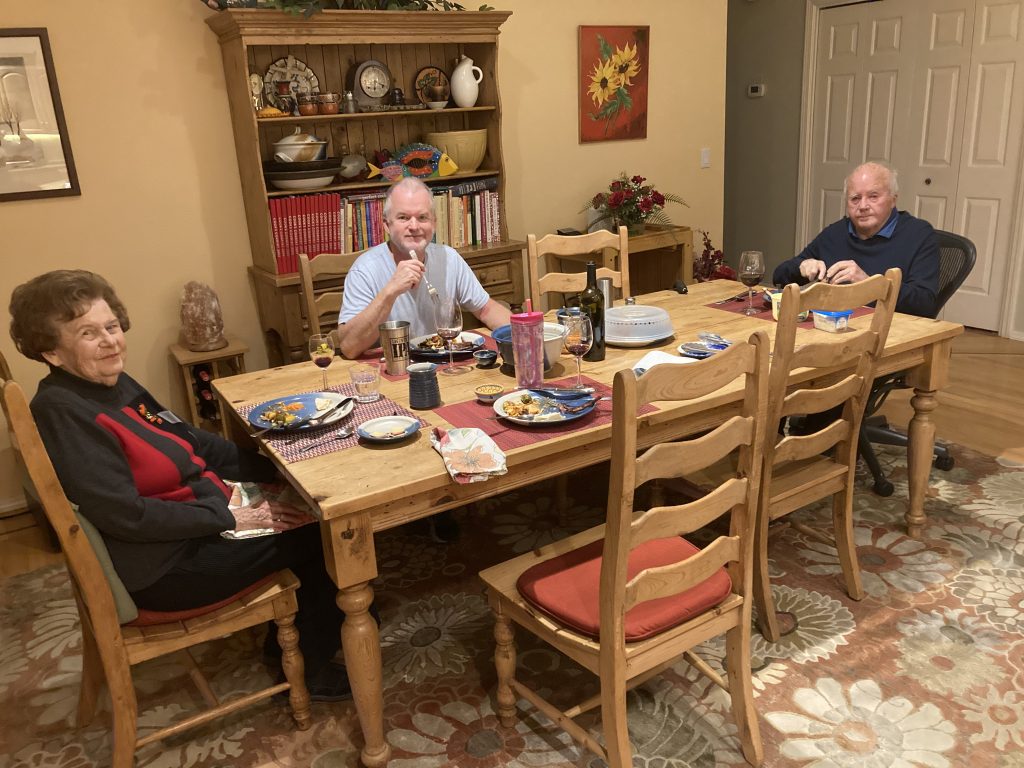
Socially distanced Veteran’s Day dinner with our parents Scott, myself and Anita are 6 feet from Jim at our large dining room table
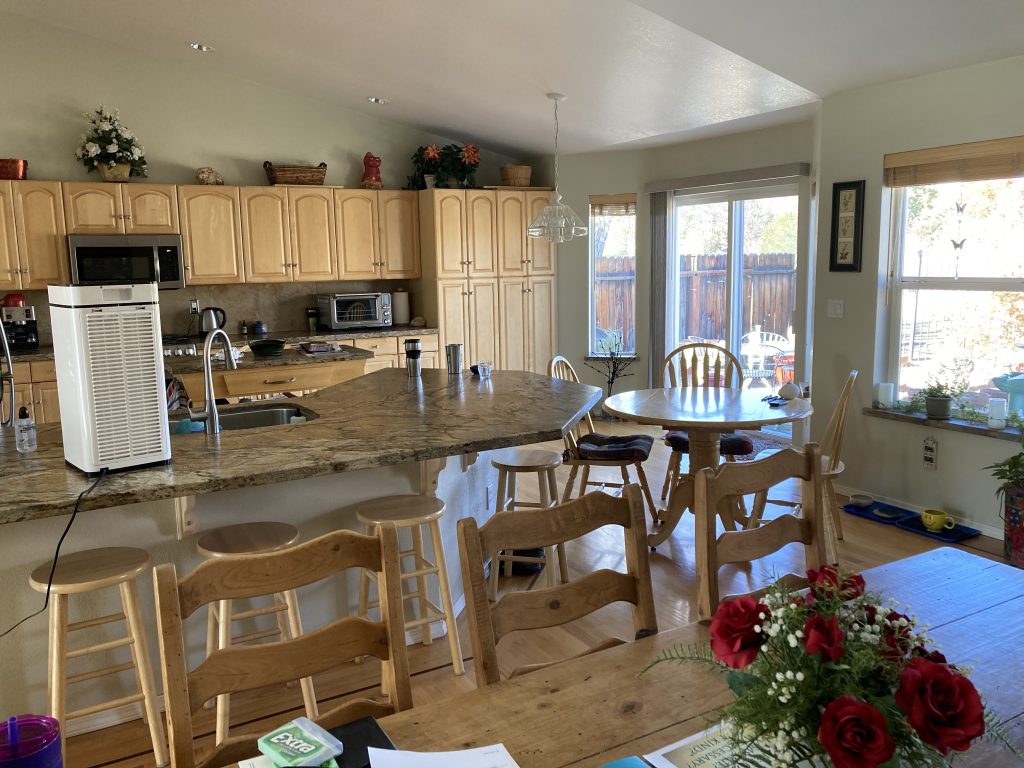
Now we are preparing for Thanksgiving next week. It has been a tradition for Scott’s oldest brother and his lady to host. They really want to celebrate Thanksgiving with Jim and us, and Jim would like this too. Again, we all discussed the increased risk in having another household join in and how we might handle it as safely as possible. We agreed that we will all wear masks when moving around the house (like a restaurant’s protocol). Scott and I will handle the food prep and serving using COVID hand cleaning protocols and wearing masks. Jimmy and Scott will grill the turkey outside. Here’s how we plan to set up the house:
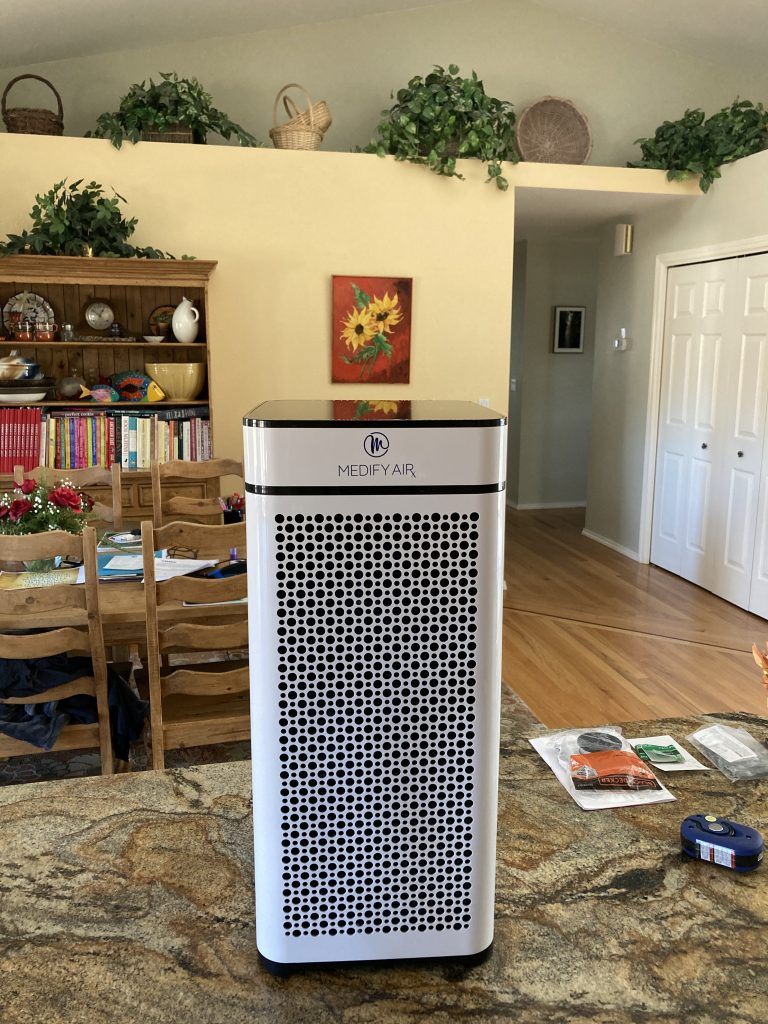
The dining room table will be set up similar to Veteran’s Day dinner with Jimmy and Terri on one end and Jim on the other. Mom, Scott and I will sit at the kitchen table, 6 feet away.This Medify HEPA-13 filtration system (model MA-40) will be on the kitchen counter cleaning the air continually in the kitchen/dining room area. It is the one used by our dentist.We will crack the window in the dining room and use this Eden Pure heater (black box) to keep everyone warm and circulate air.In the living room (opposite from the dining room window), we will crack this window to add cross-ventilation.
Scott and I have agreed that this is the maximum number of people and households we are ok with hosting using these protocols. It will allow Jim to see his children and have a meal with them in smaller groups.
Christmas is usually a large, family affair with 25+ people in attendance. Gatherings like this are very risky and we’ve all agreed not worth it. So we will celebrate Christmas with just us and our parents, set up similar to Veteran’s Day. Maybe we will plan FaceTime calls with other family members so we can share with them remotely.
This is a year unlike any we’ve experienced before. But it is a unique opportunity to get creative and find new ways of connecting while staying protected. It looks like we will have a vaccine soon. Hopefully, enough of us will be vaccinated that we can have a more normal holiday season next year. For now, it’s up to us all to make the best choices we can to slow the spread of the virus and save lives.
Wishing you all a Happy Thanksgiving and a Blessed Christmas!
I wrote this blog for Reno Friends (http://www.renofriends.org) and was inspired to share it on my own site.
…And
yet we could hurt no man that we believe loves us. Let us then try what Love
will do: for if men did once see we love them, we should soon find they would
not harm us… William Penn, 1693
Back in May, when the Black Lives Matter protests were beginning after George Floyd’s death, Reno Friends had an opportunity to love our neighbors. Due to the pandemic, we were meeting outside in our garden, so we could be together yet keep our distance. We had sent a letter to our neighbors asking if they could bring in their dogs during our hour of Silent Worship.
On the Sunday after the protests in Reno’s downtown, we sat for peace and equality. As we were settling into our chairs, we noticed a number of people and dogs in our neighbor’s yard. Suddenly, loud, acid rock began playing out of a bedroom window facing the garden. I went over and let them know we were about to begin worship and asked if they could bring the dogs in and turn the music off. The grandmother told me that it was difficult to control the dogs. I understood in that moment that she had absolutely no control over the actions of the young men playing the music.
We decided to choose the path of peace and, leaving our garden, selected a tree out in the park where we had a lovely Silent Worship. We were joined by two squirrels, one ironically seeking sanctuary from a bully squirrel who was chasing him. The timid one hid under a lawn chair until he could race through the midst of us back to his burrow.
Shortly after that first Sunday, the Ministry and Oversight Committee decided to extend a gesture of neighborly friendliness and peace toward our neighbors, even though we were unhappy about the loud music that had disturbed our garden worship. We put together a gift bag for the family’s little boy, who is about three years old and loves to greet the USPS and UPS drivers. It contained a UPS truck and a satchel of small letters and packages designed by one of our members, as well as some construction vehicles the child would likely to see on the streets. We also made a goodie bag of cookies, espresso mix, and chocolate for the rest of the family.
I was planning to deliver our gifts, but circumstances kept delaying me. In the meantime, we continued to meet for worship in the garden on Sundays and noticed the neighbors were making their best efforts to keep their dogs indoors and that there was no more loud music.
About two weeks later, my not-so-still-small voice inside said, “Go buy some flowers and deliver it all, now.” I remember arguing that it was lunch time and I didn’t want to bother them. But the voice was relentless, so I went, picking up flowers on the way. I’m so glad I listened. It was a little after noon when I pulled up to the Meeting House and saw the grandmother out on the porch with the dogs.
I took the gifts to the gate and she came over. I introduced myself and said I was with the Quakers next door and we wanted to offer these gifts of neighborly friendliness and peace. She said we didn’t have to do that. She was trying her best to keep the dogs in and quiet, but she couldn’t always control her boys. She apologized for what had happened.
She went on to explain that it had been a very hard time recently for their family. Her mother had died two weeks earlier. They had a celebration of her life while she was still alive, as this had been her wish and several family members had come into town to be part of it. That was why there were so many people next door that Sunday after the demonstrations. I suddenly understood the tension I had felt when I’d gone over to talk with her.
I told her I was sorry for their loss and that we absolutely wanted them to have these gifts. I was even more glad I had come as I was led, and that I brought flowers. I expressed our gratitude for the efforts they had made the last two Sundays, which were very pleasant out in the garden. She told me she’d requested that her family respect our time in our garden, since it is only “one hour a week.” I asked her to let us know if they have a family gathering we need to work around, and we will find a tree in the park again.
We chatted for a bit (it was her lunch break, so the timing was perfect). I learned that her family lives with her and she is grateful for their company. She said she wanted to support our worship as she saw how much it had pained her mother not to be able to go to church at the end. She also told me she is a spiritual person, though she doesn’t attend church. I invited her to sit with us anytime she would like, even if it’s from her own porch. She smiled at this invitation, thanked us for our gifts and wished me a good day.
In July, we had a Zoom spiritual discussion on the subject of Loving Thy Neighbor (No Exceptions). There was rich and poignant sharing about the challenges of loving others without exception, particularly when we disagree or feel upset with each other. Friends shared these insights:
Sometimes it’s helpful to agree to disagree. We can stand in our own integrity and truth, while respecting the different position of the other person.
There is power in holding those with whom we disagree in the Light.
It is important to approach interactions with curiosity and compassion.
Before communicating when upset, it is prudent to deal with anger/fear in oneself first. Then we can be clearer when we reach out to the other person.
It helps to remember that we all struggle, and that we don’t know what another is experiencing.
Our experience with our neighbors and the spiritual discussion that followed brings to life something another Friend spoke about during Worship: Be kind to others; you never know what pain and hardship they may be going through. It is also a testimony to the current need and power of one of our own sayings: Love thy neighbors, especially those you might not choose as friends. It seems to me now is a time for us to live this testimony in our everyday interactions out in the world. The peaceful change we seek lies within us.
Yesterday was Independence Day. Upon reflection, I found myself wondering why we don’t celebrate Interdependence Day? The way I see it, we are all interdependent with each other, with all forms of life, with the planet itself. I wonder sometimes how this world might be if we honored our connection with all of life?
This morning I meditated on the strawberries I was eating for breakfast. I pictured the seeds being planted and nurtured by the grower, which is usually a whole group of people involved in planting, watering, weeding and harvesting. Many of these people come from other countries and endure hardships and low wages so we can eat strawberries. I am very grateful to them and I wish we treated them better. I reflected on nature itself–the sun, earth, water, and bees that grew the fruit. I thought about the folks who then crate and transport this delicious fruit to my grocery store. This led to thinking about all that goes into our transportation infrastructure and the vehicles and fuel it takes for this step. And then there is my local grocery store where people are currently facing personal risks as essential workers so I can buy the strawberries. I was filled with a feeling of gratitude and wonder as I considered all the life energies involved in the simple gift of strawberries on my breakfast table.
If you think about it, everything that sustains our life has a chain like this. We are not islands, independent unto ourselves. This point has become ever clearer to me since the pandemic began. We cannot lock ourselves in our homes and survive for long. Even our homes depend on a huge amount of infrastructure coming from multiple sources in order for us to survive: water, electricity, heat, sewer and trash services are all essential. How long can you stay at home before you have to go out and get supplies? Where do these supplies come from? All over the world.
Countries are also interdependent. We depend upon one another to share resources, to trade, to help each other and to protect the biosphere on which we all depend. The pandemic gives us an opportunity to learn from each other, to help one another, because it is happening to all of us.
Human life is fragile. It depends on a lot of scaffolding to hold it up. I am humbled by this realization. I cannot survive by myself. I am also heartened to think that we are all inter-connected and dependent upon one another and the entire natural world. All lives matter. We are part of something large and magnificent that holds us in its arms. By nature, we are social animals designed to live in groups and form bonds of love and caring. Unless something happens to damage it, our natural tendency is to reach out to one another with compassion if someone is hurting or in need. We have seen a lot of that in recent times, and well if I look back, in all times.
I have faith and hope in our love for each other, our love for nature and our beautiful planet. My hope is that love will melt the mirage of independence that keeps us isolated and we can celebrate our interdependence–the great dance of giving and receiving that is the truth of Life.